Posts Tagged With: nostalgia

Who lives, who dies, who tells your story?

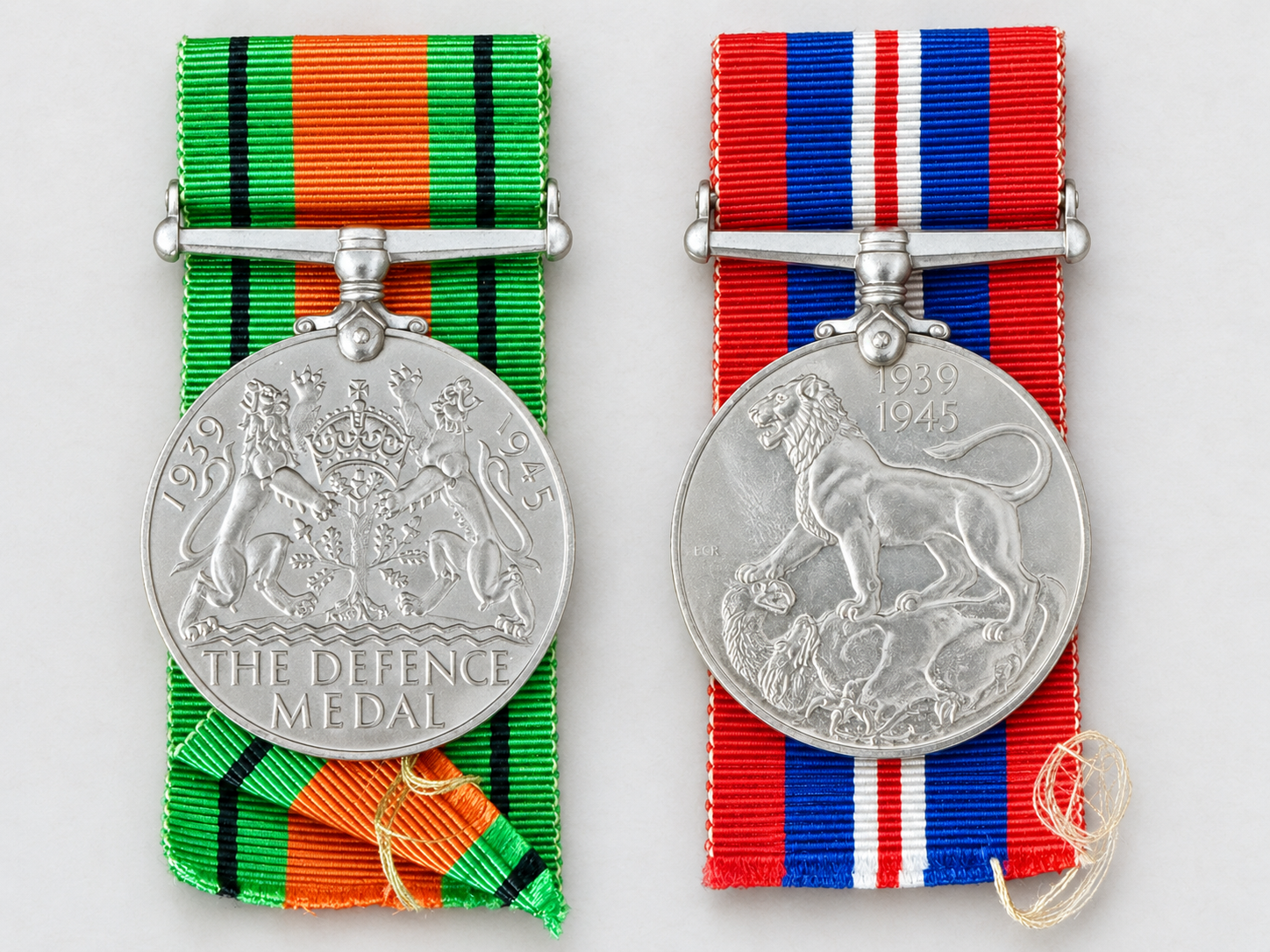
I have two of Mr Naylor’s medals.

He didn’t leave them to me. After he died, I found them among the things in his house after his belongings had been picked through by fairly distant relatives.

I couldn’t bear the thought of them simply disappearing. They were wrapped in waxed paper, tucked inside a small, battered cardboard box marked OHMS.

I knew they must have meant something to him.

So I kept them.

More than twenty years later, I found myself looking at them properly.

There are two: a Defence Medal and a War Medal 1939–45. Unlike the First World War medals I’d been looking at as part of some family-history research, neither has its recipient’s name stamped around the edge. But the box does have a name and address:
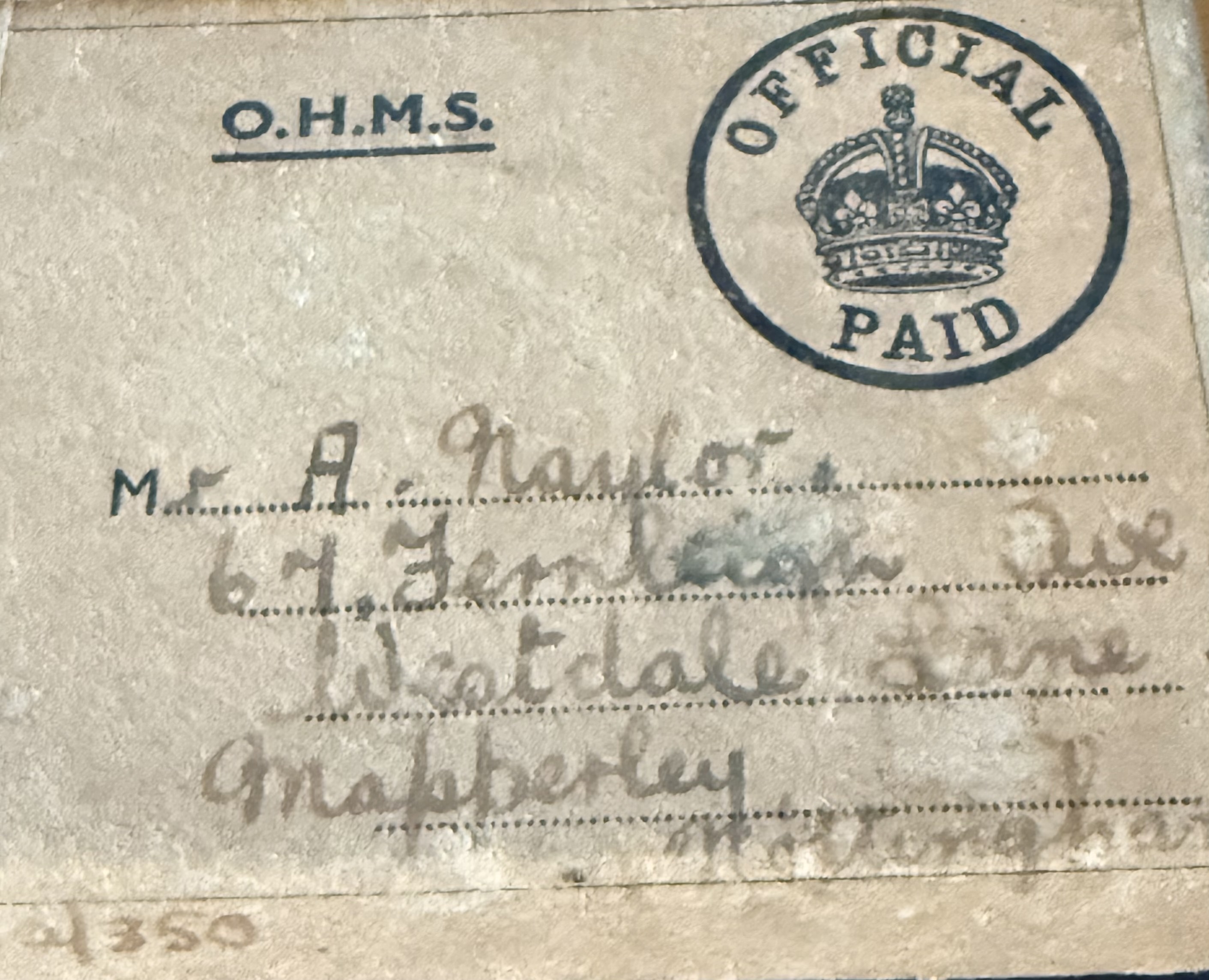
Mr A. Naylor
67 Fernleigh Ave

Westdale Lane
Mapperley
Nottingham

Which is odd.

Because Mr N lived at number 71.

Which naturally prompted some questions that I just can’t help trying to unpick.

We moved to Fernleigh Avenue when I was a child – probably around 8 years old – and my earliest memory of the Naylors involves a guinea pig.

Ours had escaped and, exercising the sort of navigational judgement you might expect from a guinea pig, had ended up next door.

Mrs Naylor was lovely. Larger than life, certainly compared with her husband, and wonderfully welcoming as we attempted to retrieve our fugitive pet from her garden.

Mr Naylor was much quieter.

In fact, in those earliest memories he was almost a supporting character to Mrs N. He was just Mr Naylor, although over the years that became shortened to Mr N.

I don’t think I even knew Mrs Naylor’s first name back then.

I do now.

She was Dorothy.

Dorothy Naylor died in 1988, which means it can’t have been very long after we moved to Fernleigh Avenue. And with her death something changed. Not immediately or dramatically, but the quieter half of the couple next door gradually became somebody we knew much better.

Mr N became a fixture.

He was a Derby County supporter, which was unfortunate given that he had moved into a Nottingham Forest-supporting household’s sphere of influence.

He particularly enjoyed asking about the football when Forest had not done very well. These enquiries were invariably delivered with an innocence that fooled nobody. His calm delivery belied a wicked sense of humour.

As it turns out, he had earned the right.

Mr N really was from Derbyshire.

His full name was Archibald Naylor, and he was born on Christmas Day, 1906.

That was something else I once knew and had forgotten. Mr N’s birthday was Christmas Day.

The records put his birthplace at Ilkeston. His father, Henry William Naylor, came from Loscoe and was a self-employed confectioner.

In 1921, Archie was fourteen.

This is where researching somebody you actually knew becomes slightly peculiar.

The Mr N of my memory is an old man. I can picture him perfectly well in his house next door. I can hear the mischievous enquiries about Forest. But until now I’d never had cause to imagine fourteen-year-old Archie Naylor.

He had a job.

He was an errand boy for a hairdresser called W. Annable.

There is something wonderful about discovering such a completely mundane fact about somebody decades after they died. I knew Mr N for years. I knew what football team he supported and what he thought constituted an adequate Sunday dinner.

I had absolutely no idea he’d once been a hairdresser’s errand boy.

By 1935 he’d moved into another phase of his life. Archie married Dorothy Shephard that year.

Four years later, the 1939 Register finds them together on Fernleigh Avenue. I suspect they may have moved there as newlyweds, possibly even into a newly built house, although that’s one part of the story I haven’t yet managed to prove.

Archibald Naylor, born 25 December 1906.

Dorothy Naylor, born 26 September 1902.

Both had the same occupation:

Hosiery cutter.

Perhaps that’s how they met.

I don’t know that, and records can’t tell us. Nottingham and its surrounding towns were built on hosiery, so two people working in the industry finding one another was hardly remarkable.

But I like the possibility.

What we can say is that in 1939 the young Mr and Mrs N weren’t at number 71.

They were at 57 Fernleigh Avenue.

At some later point Mr N’s address was number 67, because that’s where his wartime medals were sent. By the time I knew him, it was 71.

Fernleigh Avenue was still developing around them, with new houses appearing and numbering changing. Exactly when those numbers changed — and whether every change represents renumbering rather than a move a few doors along — is something I haven’t quite untangled yet, I’m pretty sure they never moved house though.

But the little cardboard medal box suddenly made something I’d never thought about before visible.

Mr N had been on Fernleigh Avenue for a very long time.

The medals themselves raise more questions than they answer.

The two I have are the Defence Medal and the War Medal 1939–45.

I have a vague recollection that Mr N’s war was spent at home, perhaps in something akin to the Home Guard. I certainly don’t remember him talking about serving overseas.

But memory isn’t evidence, and I don’t know.

That’s one of the strange things about this exercise.

Why didn’t I ask him?

The obvious answer is that I was a child and then a teenager, and Mr N was an old man who lived next door. Although, like plenty of teenage boys, I went through at least a passing obsession with the war, which makes it slightly surprising that I never thought to ask.

People don’t generally introduce themselves to children with an eighty-year autobiography.

And when somebody is part of your everyday life, you tend to know them in the present tense.

Mr N was simply Mr N.

His lounge had decorative plates on the wall depicting Bill Sikes and Fagin. I remember those.

He had an elephant door knocker. I remember that too. In fact, the elephant survived him, migrating next door and spending its retirement in the garden room at Mum and Dad’s.

I remember his football team.

I remember his dinners.

I don’t remember ever asking what he’d done to earn the medals.

As he got older, Mr N increasingly relied on Meals on Wheels.

There was, however, a flaw in the system.

They didn’t deliver on Sundays.

So Mum started plating up an extra Sunday dinner and we’d take it round to him.

The first time we did this, Mr N inspected what we’d brought and asked about pudding.

We didn’t habitually have pudding.

This apparently constituted a serious failure in the service we were providing.

Mum frantically improvised something.

Thereafter, we had pudding on Sundays.

Thanks, Mr N.

Eventually somebody reached the fairly obvious conclusion that if we were cooking Mr N a Sunday dinner anyway, carrying it next door was unnecessarily complicated.

So instead of dinner going to Mr N, Mr N came to dinner.

And then Christmas.

I hadn’t thought until doing this research about the fact that every Christmas Mr N spent with us was also his birthday.

Christmas Day 1906.

I must once have known that. Perhaps we even marked it at the time. But it had disappeared somewhere into the enormous collection of things you once knew and didn’t realise you’d forgotten.

The record gave it back to me.

There was one occasion when I got home from school before Mum and Dad.

The phone rang.

It was Mr N.

He wasn’t very well.

I was old enough to understand that something needed doing, so after popping over to him and finding him struggling, I called an ambulance.

Unfortunately I wasn’t quite smart enough to reliably calculate which direction house numbers went.

We lived at number 69. Mr N lived next door, so in my youthful wisdom I subtracted two and confidently told the emergency services operative that he was at number 67.

He wasn’t.

He was at 71.

Mr N, despite being ill enough that I’d just summoned an ambulance for him, had to correct me.

I find that particularly funny now.

Because sitting in front of me today is a cardboard box addressed:

Mr A. Naylor
67 Fernleigh Avenue.

I was right.

Just several decades too late.

Archibald Naylor died in the first few months of 2004.

He was 97 years old.

That number surprised me even though I knew he’d been well into his nineties. Ninety-seven years is an enormous amount of life.

And what follows is an almost comically inadequate summary of one.

He had been born before the First World War.

At fourteen he ran errands for a hairdresser.

He married Dorothy in 1935.

They cut hosiery for a living.

He lived through another world war and undertook some form of service during it, although I still don’t know exactly what.

He spent decades with Dorothy.

He lost her in 1988 and lived another sixteen years without her.

And that’s about it.

Ninety-seven years compressed into a handful of facts gathered from forms filled in decades apart.

I don’t know what Archie was doing on his twentieth birthday. I don’t know where he and Dorothy went on their first date, or whether they had one. I don’t know what they did on Saturday nights, where they went on holiday, what frightened them, what they argued about, or what made them laugh.

I don’t even know what he did during a world war whose medals are sitting on the desk in front of me.

But I do know that, much later, he expected pudding with his Sunday dinner.

And perhaps that’s the strange bargain between records and memory.

The records can tell me things about Mr N that I never knew. They can introduce me to Archie: the Derbyshire boy, the fourteen-year-old hairdresser’s errand runner, the hosiery cutter, Dorothy’s new husband, the man already living on Fernleigh Avenue before the Second World War had begun.

But the records don’t know about the Bill Sikes and Fagin plates.

They don’t know about the elephant door knocker.

There is no box on the 1939 Register for enjoyed enquiring about Nottingham Forest after a defeat.

And nowhere in the official record of the life of Archibald Naylor will it say that an elderly widower once asked where his pudding was and consequently changed the Sunday dining habits of the family next door.

Those are the bits we get to keep.

Between the records and the memories, perhaps we can see a little more of him than either could preserve alone.

Not a 97-year life. Not even close.

Just fragments of one.

For more than twenty years, two of those fragments have been sitting in a little cardboard box.

I kept Mr N’s medals because I knew they mattered to him. I still don’t know exactly why.

But they made me curious enough to ask.

And perhaps that’s what telling somebody’s story really amounts to.

Not recovering everything.

Just making sure that a little more of them survives.
Categories: Blog | Tags: , , , , , | 1 Comment

One Step Left of Limelight

Title irresistibly pilfered from the excellent Gaz Brookfield’s ‘Limelight’

I’ve always hated the term “Hell Hounds”.

For the uninitiated, it’s a name adopted by some of the more dedicated followers of Ferocious Dog. There’s absolutely nothing wrong with it. People like belonging to things, people like having names for the things they belong to, and if calling yourself a Hell Hound makes you happy then you should absolutely crack on.

But it makes me cringe.

Worse still is anything along the lines of “a proper Hell Hound would…” or “all Hell Hounds think…”

Ugh.

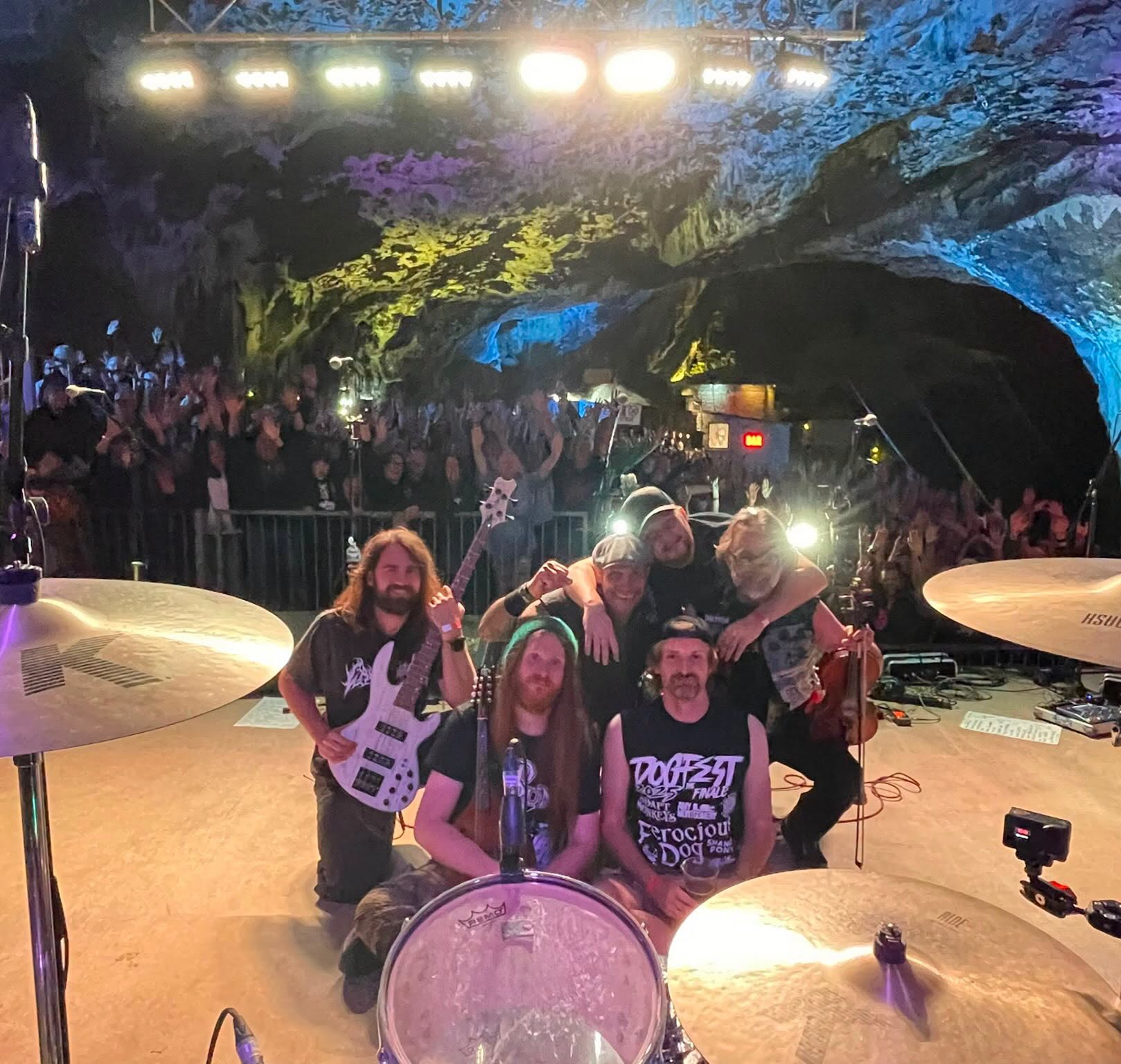
The early days: lots of familiar faces, ridiculous amounts of travelling and a community I was very happily part of – whatever anybody wanted to call us.

A warning before we go any further: this is going to be an unusually self-indulgent post.

Most things I write here might start with me, but generally wander off fairly quickly towards a place, a memory, a bit of history or whatever other rabbit hole has caught my attention. This one is, unapologetically, about me. Almost entirely.

I’ve recently been rummaging through an extraordinary amount of detritus left behind by younger versions of myself – old fanzines, university records, ancient websites, forum posts and blogs – and somewhere along the way I realised I’d inadvertently assembled something approaching a thirty-year archive of how I thought, what interested me and where I chose to spend my time.

So naturally, rather than doing anything sensible with this information, I decided to conduct an amateur psychological investigation into myself.

What could possibly go wrong?

The starting point for this particular bout of navel-gazing was something I’d previously filed away as just another one of my quirks.

Why does something as innocuous as “Hell Hounds” irritate me quite so much?

And in trying to answer that, I stumbled into a much bigger question about something I’ve done for most of my life.

I’m not sure I’m very good at belonging.

Which probably sounds ridiculous to anybody who knows me.

I’ve spent huge chunks of my life immersed in communities. As a teenager I was involved with my brother’s Nottingham Forest fanzine, Forest Forever. Later I helped establish the Lost That Loving Feeling forum and became part of the community that grew around it. I wrote anonymously about Forest for years on another blog. As football gradually became less important to me, music increasingly took its place and I spent years travelling around the country and beyond watching Ferocious Dog, started Ferocious Blog, acquired another sprawling collection of friends, a life partner, and eventually even ended up playing in a band myself.

Alongside all of that, in various incarnations, domains and bits of increasingly obsolete internet technology, I’ve maintained a personal website or blog for most of my adult life.

So I’m hardly a hermit.

And yet there’s a pattern here that goes back much further than any of those things.

Clique hopping

At secondary school I was a serial clique-hopper.

I had friends in lots of different groups without ever feeling completely embedded in one. I probably never fully penetrated the genuinely cool groups, and certainly not the particularly sporty ones, but I was generally on good terms with them. I could move between groups reasonably comfortably.

At the time I don’t remember thinking there was anything significant about this. Why would I? They were just my friends.

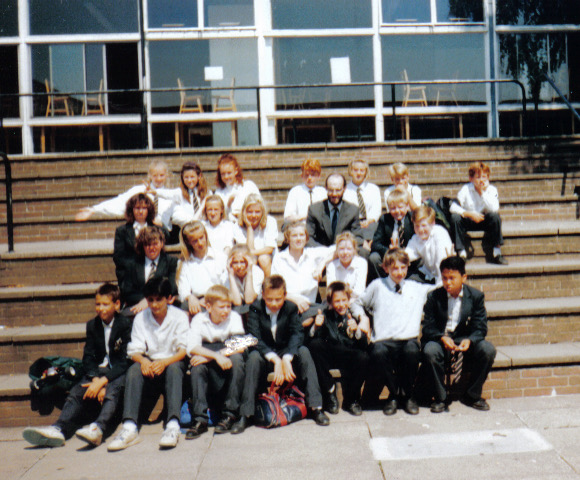
Exhibit A: My secondary school tutor group. I’d intended this to illustrate my teenage clique-hopping, until I noticed I wasn’t in the photograph, I was outside the group documenting it from behind a camera. Of course I was.

Looking back, though, I’ve sometimes wondered whether there was a strategy buried in there that I didn’t consciously understand.

If you’re friendly with everybody but never invest your entire social identity in one group, nobody can completely reject you.

Was that what I was doing?

I genuinely don’t know.

There’s an obvious danger when rummaging around inside your own childhood from the vantage point of several decades later. Memories aren’t data, and it’s remarkably easy to retrofit an elegant explanation onto behaviour that was actually just a teenager wandering around talking to whoever happened to be there.

But the pattern didn’t entirely disappear.

I’ve continued to move quite comfortably between groups of people throughout my life. I can become heavily involved with a community without ever quite planting a flag and thinking: these are my people; this is where I belong.

Or perhaps that isn’t quite right either.

Maybe I don’t have a problem belonging.

Maybe I have a problem claiming that I belong.

Know your place

I notice it particularly around people who attract attention.

If I know somebody who happens to have a crowd of people wanting to speak to them, I will almost invariably concede the space.

There are perfectly reasonable motives for that. I’ve probably had plenty of opportunities to talk to them before. The person waiting might not have. Their time isn’t mine to monopolise.

But if I’m being completely truthful, there’s another calculation going on too.

Who am I to assume they particularly want to talk to me?

And perhaps even more revealingly: I absolutely do not want the people around them to think I’m hanging around simply because they’re somebody worth hanging around.

Which can create the slightly ridiculous situation where my relationship with somebody is being influenced by the imagined judgement of complete strangers who know neither of us.

To assert I actually know this person feels hideously self-important, even when it is simply an unremarkable statement of fact.

So I tend to step back.

The other person may not be conducting any of these calculations whatsoever. They might simply see me and think, there’s Al.

Meanwhile I’ve convened a committee meeting in my head to establish whether I have sufficient standing to say hello.

A proper Hell Hound

Which brings me back to those bloody Hell Hounds.

I don’t actually dislike communities. The evidence against that proposition would be overwhelming. I’ve spent much of my life joining them, helping to create them and documenting them in frankly unnecessary levels of detail.

What I really dislike, I think, is what can happen when membership becomes an identity and the identity starts acquiring rules.

A proper fan would…

People like us think…

You can’t call yourself a real supporter if…

Something inside me immediately responds:

Who the fuck put you in charge?

This turns out not to be an entirely unexplored psychological phenomenon.

In 1991, psychologist Marilynn Brewer proposed Optimal Distinctiveness Theory. In extremely simplified terms, it describes a tension between two social needs: we want inclusion and belonging, but we also want to retain our individuality. We therefore negotiate a comfortable distance between being part of the group and being swallowed by it.

That struck a chord.

I want to be able to love a band without having to love every record they make. I want to disagree with other fans without having my credentials checked. I don’t care how many gigs somebody has attended, whether they were there “before they got big”, whether they know members of the band or whether they bought the limited-edition commemorative tea towel.

And I certainly don’t think doing any of those things gives me the right to tell somebody else how they should enjoy the same thing.

Belonging is fine.

Terms and conditions apply? Not so much.

An accidental longitudinal study

The problem with amateur self-analysis is that it’s incredibly easy to talk yourself into whatever conclusion appeals to you.

Fortunately – or perhaps unfortunately – I have something most people don’t have when attempting to work out whether they’ve behaved consistently over several decades.

I have an absolutely ludicrous amount of evidence.

I have been leaving bits of myself lying around on paper and the internet since I was a teenager.

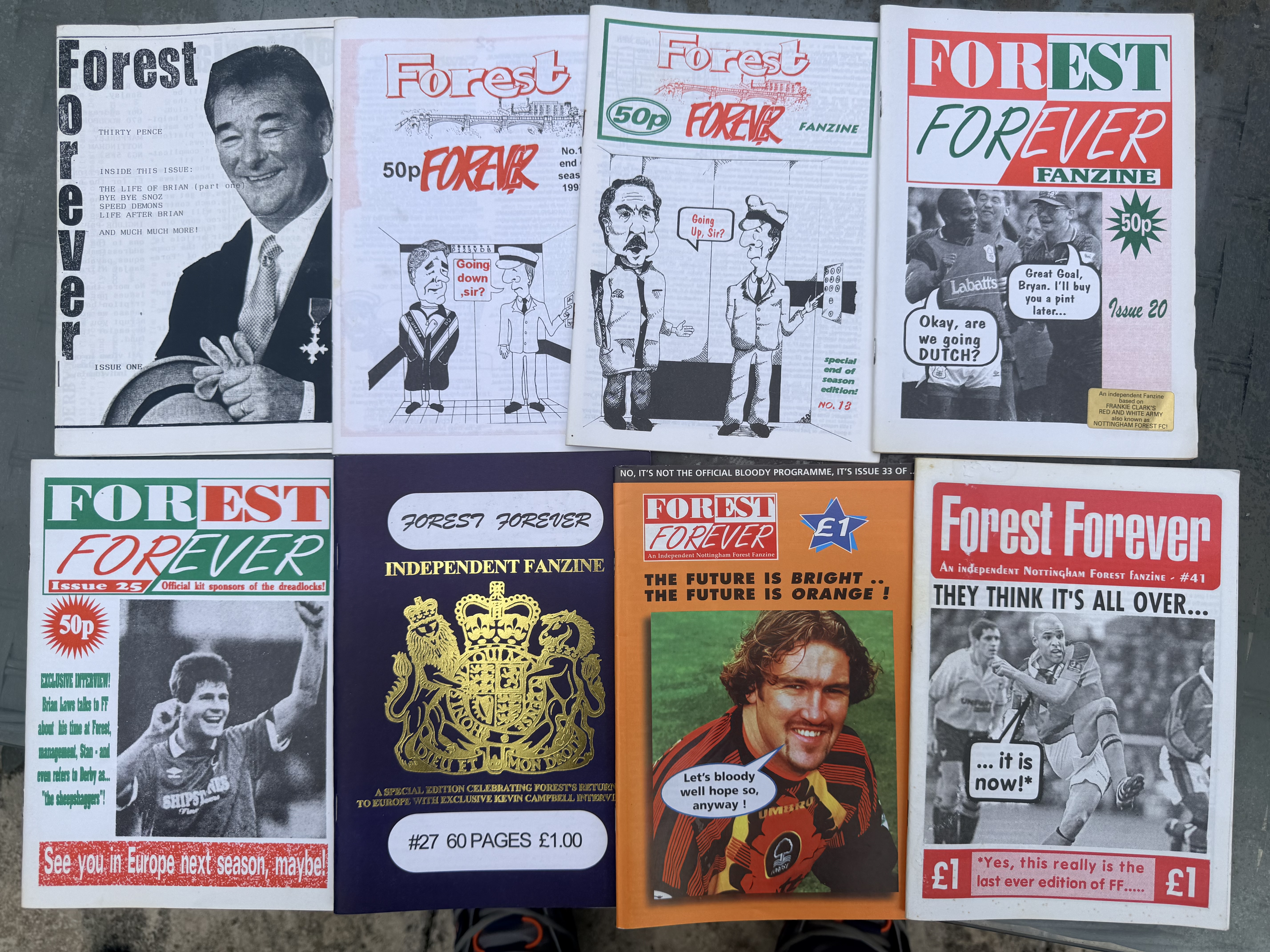
There are forty-one issues of Forest Forever in a box in the shed. There are old websites, forum posts, cartoons, abandoned domains, blogs, comments and articles. Some were written under my own name, some under usernames and one entire Forest blog was deliberately written anonymously.

Exhibit B: Forest Forever, from Issue 1 to Issue 41. Apparently I’ve been leaving evidence for the prosecution since the early 1990s.

My personal website has existed in one form or another throughout most of it, quietly accumulating whatever happened to interest me at the time.

More recently I’ve been digging through some of this detritus.

It’s an odd experience.

Normally when we remember our younger selves, we do so through the filter of everything that has happened since. I can tell you what I think I was like at 30.

But occasionally I can also ask 30-year-old me.

And he left several thousand words explaining himself.

The superficial story is one I’ve sometimes been slightly unkind to myself about.

I flit.

Forest Forever ends. Later there’s LTLF. Then an anonymous Forest blog. Then Ferocious Blog. Subjects change, platforms change, communities change.

There he goes again.

Another enthusiasm. Another project.

Can’t stick at anything.

Except the closer I’ve looked, the less convincing that interpretation has become.

Forest Forever largely ended because my brother went away to university. My first significant withdrawal from football coincided with the teenage discovery that girls were considerably more interesting than Nottingham Forest. My later disenchantment with Forest coincided both with increasing unhappiness about football and the club’s ownership and with music becoming an increasingly important part of my life.

Ferocious Blog eventually slowed down for different reasons again. Its original purpose – essentially to shout Ferocious Dog are brilliant and you should probably go and see them – became increasingly redundant as rather more people started doing exactly that. Covid disrupted the social world around it, the crowds grew, familiar faces became less ubiquitous and my own relationship with the band and scene changed.

Meanwhile I hadn’t stopped writing.

The personal blog was there throughout almost all of it.

It never really had a purpose, which might be precisely why it survived.

Same bloke, different subject

Something else became apparent while reading the old material.

The subjects change considerably.

The person writing about them rather less so.

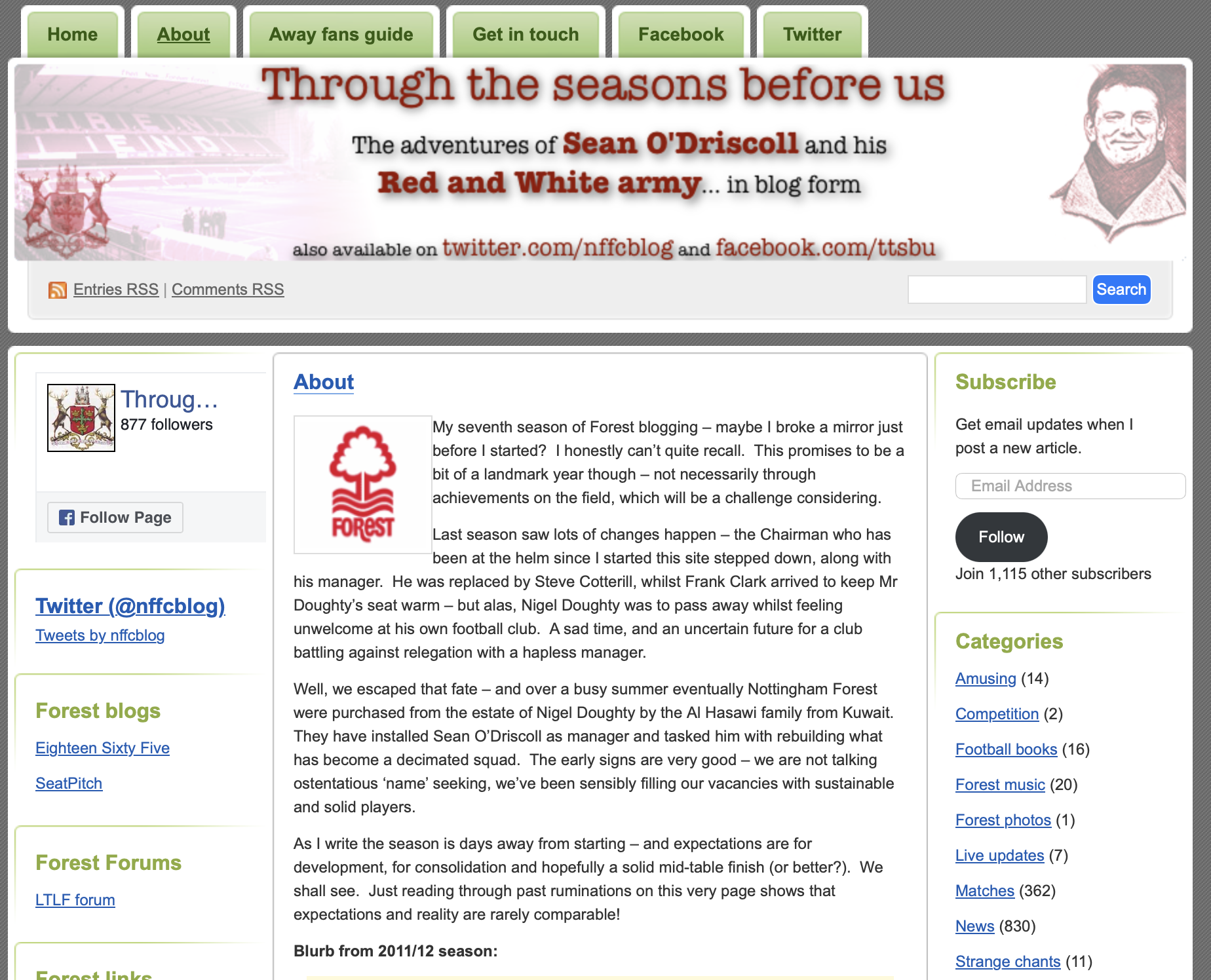
Exhibit C: actually quite selective different websites, different subjects, different centuries in web design. Annoyingly, much the same bloke behind them.

My anonymous Forest blog contains endless examples of me worrying away at group consensus. Why has everybody decided this manager is an idiot? What do we actually know about this owner? Why are we assuming that player is motivated by greed? Where did this rumour come from? Why has everybody repeated it until it became true? Why does disagreement online so rapidly turn into abuse?

At the time I thought I was writing about Nottingham Forest.

Reading it years later, there’s an awful lot about crowds, identity, conformity, communication and the way groups construct their own versions of reality.

Then I wandered away from football and started writing about music.

Different subject.

Many of the same preoccupations.

Who belongs? Who decides? What makes somebody authentic? How do relationships change as a community grows? What happens when a loose collection of people starts acquiring labels, hierarchies, rituals and rules?

Apparently I’d changed obsessions without changing all that much.

Did university do this to me?

There’s another layer to this which I’m not sure how to untangle.

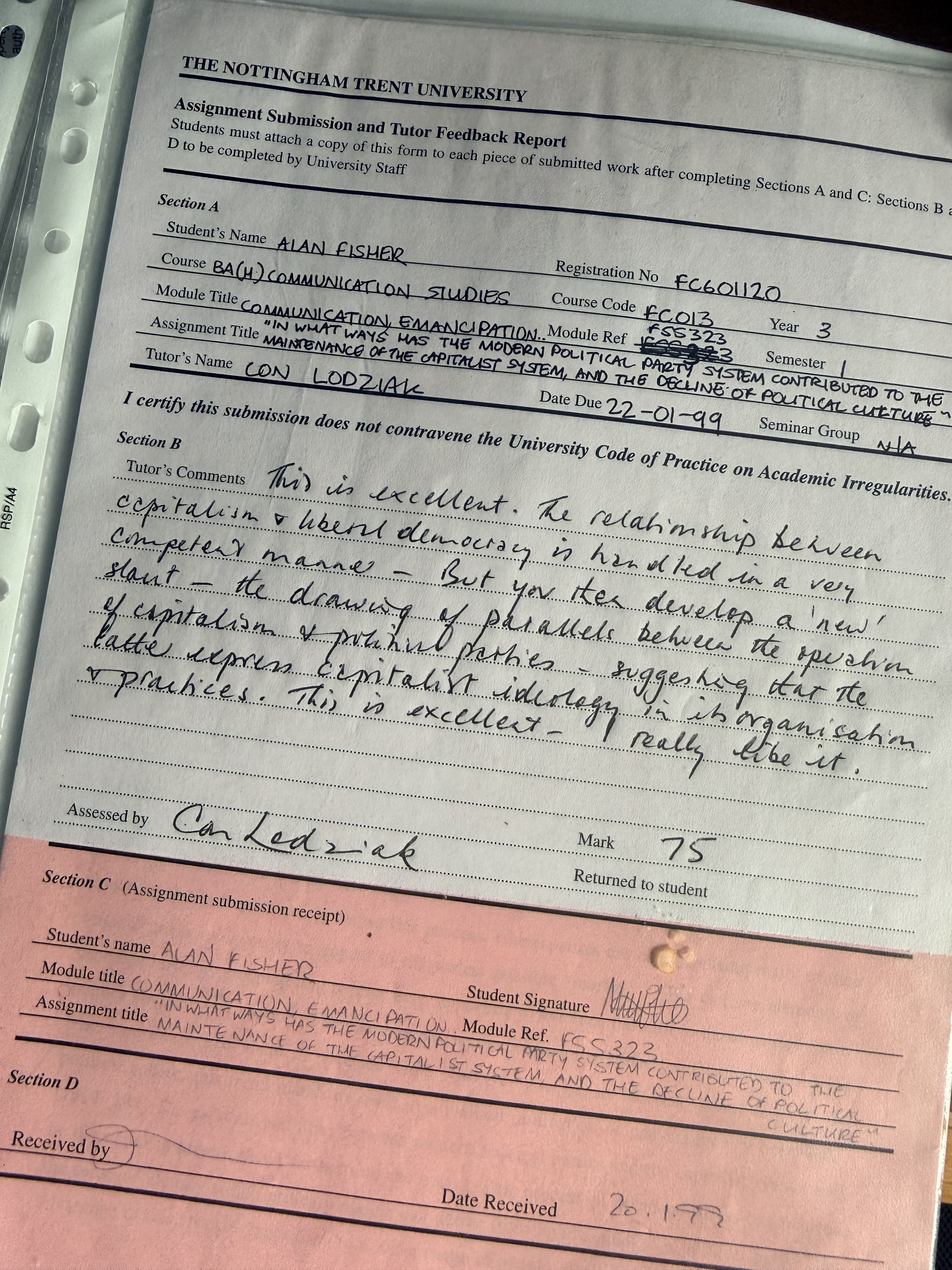
In the late 1990s I studied Communication Studies at Nottingham Trent University.

Exhibit D: did I choose subjects like these because I already thought this way, or did studying them teach me to? Answers on a postcard.

Recently I’ve also been looking back through my old academic record, and the subjects I chose and enjoyed now seem suspiciously familiar: Culture and Society, Sociolinguistics, Mass Media, Psychological Perspectives and various excursions into identity, language, culture and the ways people make sense of the world around them.

So which way round did that work?

Was I drawn to those subjects because I was already the sort of person fascinated by groups, identity and how people construct meaning?

Or did spending three years being encouraged to think about those things permanently alter the way I looked at the world?

I suspect the deeply unsatisfying answer is: both.

Perhaps university gave names and structures to questions I was already inclined to ask.

Or perhaps I’ve simply read my own subsequent history and retrofitted another convenient pattern onto it.

There’s a lot of that going on here.

An unreliable sociometer

Another idea from psychology made me slightly more uncomfortable.

Sociometer theory, developed by psychologist Mark Leary and colleagues, proposes that part of the function of self-esteem is to monitor our perceived relational value – essentially, how much we think other people value having us around.

If that’s even approximately right, I suspect mine may occasionally be calibrated a little pessimistically.

There seems to be a recurring tendency for me to demand more evidence than should reasonably be necessary before accepting positive conclusions about myself.

I’ve described myself as suffering from imposter syndrome at work.

Something similar happened with writing.

When I was heavily involved in Forest websites and forums, people occasionally told me they liked things I wrote. Rather than simply accepting this perfectly pleasant information, I wondered whether my established presence in those communities was influencing their reaction.

So I started an entirely anonymous Forest blog.

Looking back my anonymous foray into Forest writing was actually very productive!

This was, although I didn’t describe it this way at the time, essentially an experiment designed to remove the confounding variable of me.

People read that too.

Quite a lot of them, as it happens.

Apparently confronted with evidence that contradicted my hypothesis, I responded in the traditional scientific manner by quietly moving on and finding other things to doubt about myself.

The bigger the crowd, the smaller the world

This also gives me a different way of thinking about my changing relationship with Ferocious Dog.

In the earlier years I could walk into a gig and recognise a ridiculous proportion of the people there. The same faces appeared everywhere. Gigs were gigs, but they were also reunions.

Then the band became more successful and the crowds became bigger.

This was obviously a good thing. I’d spent years writing a blog whose barely concealed purpose was to encourage precisely this outcome.

The bastards eventually listened.

I’m in there somewhere with Ella, at Devil’s Arse, Derbyshire in August 2026.

But something changed for me.

A room containing a thousand people who like the same band as me ought logically to contain more of “my people” than a room containing a hundred of them.

It didn’t feel that way.

There were fewer familiar faces proportionally. Less of the feeling of walking into a room and immediately knowing where you fitted. Covid accelerated the change. People came and went. Lives changed. Mine did too.

For a while I’ve explained that simply as losing some of my passion for the band, and there’s undoubtedly truth in that.

But perhaps something else diminished too.

Not membership of a fanbase.

The density of relationships within it.

Those aren’t necessarily the same thing.

Belonging, but not too much

So where does all this leave me?

Annoyingly, without a diagnosis.

I don’t know whether teenage me moved between friendship groups because it reduced the possibility of rejection.

I don’t know whether my reluctance to assert my place in adult relationships comes from the same place.

I don’t know how much is self-doubt, how much is politeness, how much is independence and how much is simply a personality that quite enjoys wandering between different groups of people.

I don’t even know whether I’ve discovered a pattern here or constructed one because humans are extremely good at finding patterns once they start looking for them.

But I do think I’ve been slightly unfair to myself in describing some of this as an inability to stick at things.

Look beneath the changing interests and there’s actually a surprising amount of continuity.

I’ve been writing and publishing things for most of my life.

I’ve repeatedly sought out communities and formed friendships within them.

I’ve repeatedly been interested in how groups behave.

And I’ve repeatedly resisted allowing membership of those groups to dictate what I’m supposed to think.

Maybe the clique-hopping schoolboy, the Forest fanzine cartoonist, the university student writing about culture and society, the anonymous football blogger, the reluctant Hell Hound and the middle-aged bloke writing increasingly self-indulgent essays on his personal blog aren’t quite as different as they initially appear.

Perhaps I’ve simply spent my life trying to find a comfortable distance from the groups I care about.

Close enough to form real attachments.

Far enough away to retain my independence.

And, sometimes, perhaps rather farther away than necessary because I haven’t quite trusted the evidence that other people actually want me there.

I’m not sure I particularly want to change the first two.

I might want to work on the third.

In the meantime, I’m perfectly happy to belong.

Just don’t make me wear the fucking badge.

Categories: Blog | Tags: , , , , , , , , , , , , , , , | 1 Comment

KAOS at the Pit Tips

Somewhere underneath the landscaping, redevelopment and general passage of more than thirty years, I like to imagine there is still a faint chalk mark on a forgotten piece of concrete at the former Gedling Colliery.

KAOS.

There almost certainly isn’t. The surface I wrote it on has probably long since disappeared, and chalk was never built for posterity.

But for a brief period in the early 1990s, KAOS was my tag. When I say a brief period, it was likely just one afternoon.

I should probably explain.

When I was in my mid-teens, a friend and I spent quite a lot of time exploring the bits of Nottingham that were not really intended to be explored. This was the early 1990s, when teenagers seemed to enjoy considerably more freedom to disappear for hours at a time without anybody being entirely sure where they were.

Or perhaps our parents just made a serious error of judgement regarding just how sensible we’d be on our very loose leashes!

One of our favourite destinations was Pit Tips—our name for the sprawling remains of the recently closed Gedling Colliery.

Our timing, although we did not appreciate it then, was rather extraordinary.

Gedling Colliery had closed in November 1991 after nearly ninety years of mining. If my memory is right, our expeditions were around 1992 or 1993. We were not exploring some ancient industrial ruin that had been abandoned for decades. The place had barely stopped being a working coal mine.

Today, when something survives from our industrial past, there tends to be a nice path, an interpretation board and perhaps a QR code.

This was not like that.

There were still buildings. There was still machinery. Conveyor belts and great pieces of industrial equipment whose purpose I could not have explained then and certainly cannot now. Astonishingly in retrospect, two teenage boys could apparently just wander into some of it.

I have very clear memories of being inside those buildings.

I do not remember encountering security. I do not remember particularly substantial fences. I do not even remember having the sense that getting inside was especially difficult.

Fortunately, I also do not remember finding anything that offered access underground. Gedling’s mine shafts descended hundreds of metres beneath the surface, so I am extremely grateful that our particular brand of teenage curiosity remained resolutely above ground.

At the colliery, at least.

Because we had another underground playground nearby.

But before we get to that, there is the small matter of the vandalism.

Teenage delinquents. Sort of.

On at least one expedition to Pit Tips, we had gone prepared.

We took chalk.

Because while we clearly considered ourselves pretty badass, we apparently were not badass enough for spray paint.

Armed with our terrifying arsenal of coloured calcium carbonate, we liberally decorated bits of the abandoned colliery with our chosen tags.

Those tags provide an almost perfect way of dating the experience.

My friend chose Warchild.

Warchild was one of the surfers in Point Break, released in 1991 and therefore still relatively new. We were both into skateboarding at the time—although neither of us was especially good at it—so a Point Break-inspired alter ego probably made perfect sense to us. It was a respectable choice for a teenage boy attempting to establish an edgy identity.

I chose KAOS.

Not after a film. Not after a gang member. Not after anything anybody without an Amiga was particularly likely to recognise.

KAOS was a section from the first Megademo by a Danish Amiga demo group called Budbrain.

Even my teenage rebellion was nerdy.

Amiga demos were awesome

For anyone who missed that particular corner of home-computer culture, demos were programmers, musicians and graphic artists showing off. Groups produced increasingly elaborate demonstrations of what they could persuade computers like the Amiga to do, often seemingly exceeding what the hardware ought to have been capable of.

They spread on floppy disks, copied from friend to friend, and the best became minor legends among Amiga owners.

Budbrain’s first Megademo appeared in 1990 and included a section called KAOS. It clearly made enough of an impression on teenage me that I adopted it as my nom de vandalism.

So naturally I wrote it all over a recently abandoned coal mine.

In chalk.

Move over, Banksy.

Beneath the Pepper Pots

Pit Tips was not the only enticingly inadvisable place nearby.

Hidden in the trees was the eastern portal of Mapperley Railway Tunnel.

The tunnel had once carried the Great Northern Railway beneath the ridge between Gedling and Woodthorpe. Opened in 1875, it ran for 1,132 yards—just over a kilometre—before emerging on the other side of the hill near what is now Weaverthorpe Road.

By the time we found it, trains had not run through it for more than thirty years.

Getting there meant following the old railway cutting through the trees. One landmark I remember particularly clearly was an old burned-out Ford Fiesta sitting not far from the tunnel portal.

Because of course there was.

It was an abandoned railway cutting in Nottingham in the early 1990s. It would almost have been suspicious if there had not been a burned-out car in it.

The tunnel portal itself was simply open.

There may have been signs telling us not to enter. There may even have been some token attempt to discourage access that I have forgotten.

But whatever was there clearly was not sufficient to defeat two teenagers.

So in we went.

The tunnel had two ventilation shafts along its length, topped at ground level by structures locally known as the Pepper Pots, for the fairly obvious reason that that is what they looked like.

We knew them from above as well as below. At least one formed part of the site used by a local Scout group, and we had been to bonfire parties there.

Underneath, one of the shafts demonstrated another long-established local tradition: chucking rubbish into any sufficiently large hole.

People had apparently been using it as a convenient vertical dumping ground for years, resulting in an enormous cone of detritus piled on the tunnel floor beneath it.

We carried on past it.

Mapperley Tunnel had suffered badly from mining subsidence during its operational life, including a major collapse in the 1920s. After the railway closed, part of the tunnel was eventually filled.

But not quite all the way to the roof.

This was important.

Because if you are a teenage boy and somebody has gone to the trouble of filling an unsafe railway tunnel with tonnes of material but has accidentally left a narrowing gap above it, you do not interpret this as “clearly we should turn around.”

You interpret it as a challenge.

At first we could walk normally. Then we had to duck. Then duck a little further.

The ground kept rising towards the roof.

Somewhere beyond the earth ahead of us was the western portal near Weaverthorpe Road. Another Scout group had premises nearby, and friends who went there brought back tantalising reports that somebody had once dug around the buried portal and reckoned there was open tunnel behind it.

That was all the evidence we required.

We did not make it through.

Eventually the gap became sufficiently small that even our teenage brains began to register that crawling further into a partially filled railway tunnel with a long history of subsidence might not be entirely sensible.

I think we got to somewhere around where Plains Road runs overhead before finally admitting defeat.

Looking back, I find it reassuring that we apparently possessed some instinct for self-preservation.

It just kicked in considerably later than would generally be recommended.

There was also something beautifully circular about the whole expedition. One of the Pepper Pots above us was associated with one Scout group. Our mythical destination was beside another.

We were, quite literally, passing underneath one Scout group in a vain attempt to reach another.

Going back

Years later, I went back. I wrote about it on here, in fact.

By then the entrance was fenced off, which was probably a sensible development.

There was still a way in.

Which was probably less sensible.

In 2012, I returned with friends, better torches and the vastly improved judgement and maturity that comes with adulthood.

We went into the tunnel again.

We passed beneath the Pepper Pots again.

We reached the backfill again.

And we carried on until the steadily diminishing headroom persuaded us to turn around.

Again.

So apparently the principal difference between teenage me and adult me was better illumination.

What had changed much more dramatically was the world outside the tunnel.

The Gedling Colliery I remembered was gone.

The buildings we had wandered through disappeared as the site was cleared. The machinery and conveyors vanished. Nature gradually reclaimed areas that had once been dominated by heavy industry.

Even the waste recycling centre that had arrived on the site in the 1990s had gone, another brief role for the landscape blinked in and out of existence between my forays.

Eventually, much of the former colliery became Gedling Country Park.

It is, objectively, a much nicer place.

But it is almost impossible for me to walk around there without mentally superimposing another landscape on top of it.

I remember Pit Tips.

And I think that is what fascinates me most about these memories.

We happened to catch Gedling Colliery between identities.

For nearly ninety years, it had been a workplace. Thousands of people had passed through its gates. Generations had earned their living there. Coal had been hauled from hundreds of metres beneath the ground.

Then, in 1991, it stopped.

For a relatively brief period afterwards, the infrastructure remained but its purpose had gone.

And into that gap wandered two teenage boys with some chalk.

Today, I suppose what we were doing would be called urban exploration. There would be photographs, YouTube videos and online communities devoted to it.

We did not know we were urban explorers, we were making memories, not content.

We were just going to Pit Tips.

There is always a danger when remembering childhood of concluding that everything was better then.

It was not.

And I am not convinced that teenagers being able to wander unchallenged through recently abandoned coal-mining infrastructure and then disappear into a condemned railway tunnel represents an unambiguous triumph of early-1990s childhood.

In hindsight, some of it was bloody stupid.

But I am still glad we did it.

Because places in transition have always fascinated me. There is something exciting about somewhere whose original purpose has ended but whose next purpose has not yet arrived. The people have gone, but the physical evidence of what they did there remains.

Eventually somebody decides what happens next.

The buildings come down. The machinery is removed. The fences go up. The landscaping begins. Trees grow. Paths appear. Houses arrive.

And gradually the place you knew survives only in photographs and memories.

I suspect the days when people can wander into Mapperley Tunnel are numbered too. Development is pushing ever closer and, entirely reasonably, an open entrance into an unstable Victorian railway tunnel is not the sort of neighbourhood feature developers generally advertise in the brochure.

Perhaps one day it really will become inaccessible.

Perhaps that is no bad thing.

But whenever I pass that part of Nottingham, there is still another version of the landscape tucked away in my head.

A burned-out Fiesta in the cutting.

A black tunnel mouth in the trees.

Pepper Pots overhead.

The remains of a coal mine that had only just stopped being a coal mine.

And somewhere amongst it all, two teenage idiots wandering around with a box of chalk.

One of them was Warchild.

And the other—because apparently I was incapable of being cool even while trespassing—was KAOS.

Categories: Blog | Tags: , , , , , , , , , , , , , , | Leave a comment

The Lost Blackbird Song: The Blackbird Sings Again!

Back in 2011, I wrote about a song I remembered from primary school. It came from some sort of musical about a songwriting competition, in which one character wrote a beautiful song about a blackbird and another, less scrupulous character tried to steal it. To counter this, the protagonist wrote a decoy dirge-like song with the aim of that being stolen by the villain. I could remember the tune clearly (not hard, it was one note!) and, more remarkably, four lines of the lyric:

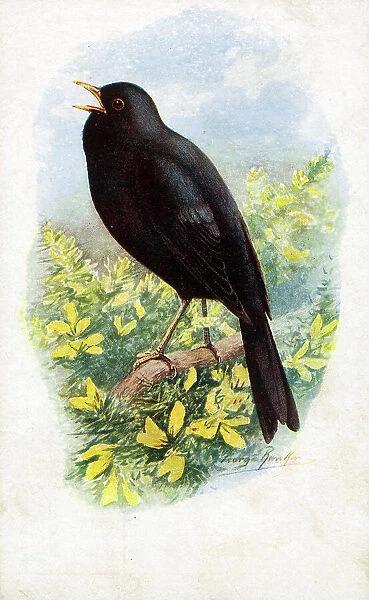
The blackbird sings a tuneful song,
With turns and trills so fine;
Such skill has he, such majesty,
But it’s not as good as mine.

What I could not remember was what the musical was called, who had written it, or where our school had obtained it. Nobody else I spoke to seemed to recognise it. Internet searches produced nothing, and so the song remained one of those odd fragments of childhood that somehow survive after almost everything surrounding them has disappeared.

Fourteen years later, in December 2025, I returned to the mystery. The internet had grown considerably since 2011, but the blackbird song remained stubbornly absent from it. I wrote a follow-up post, partly to gather together what little I knew and partly in the hope that someone else might eventually type one of those remembered lines into a search engine and find me.

That is exactly what happened.

In January, Paul left a comment saying that he remembered the song too. He believed it had been performed by Lucie Skeaping in a BBC schools programme called The Music Arcade, sometime around 1983 or 1984. He also remembered a character called Harlequin.

That last detail helped to unlock some more fragments from my memory. Once Paul had supplied the name, more of the story began to fall into place: Harlequin was trying to trick Pantaloon in a song competition.

There was a slight complication, though. Harlequin and Pantaloon aren’t exactly obscure characters. They go back to the Italian commedia dell’arte tradition and became familiar figures in British harlequinades and pantomime. So adding Harlequin and Pantaloon to my searches wasn’t quite the breakthrough it might have seemed.

Still, Paul independently remembering the same song, the same characters and The Music Arcade was far more than I’d had before.

Paul and I exchanged a few emails at the time, comparing memories and trying to pin down the programme. It was already enormously satisfying simply to discover that somebody else remembered the same thing. This was no longer an obscure childhood memory that apparently belonged only to me. Paul remembered it too.

At that point, though, we still didn’t have a recording, or anything else that definitively proved we’d landed on the right thing.

Then, completely out of the blue, another email from Paul arrived today.

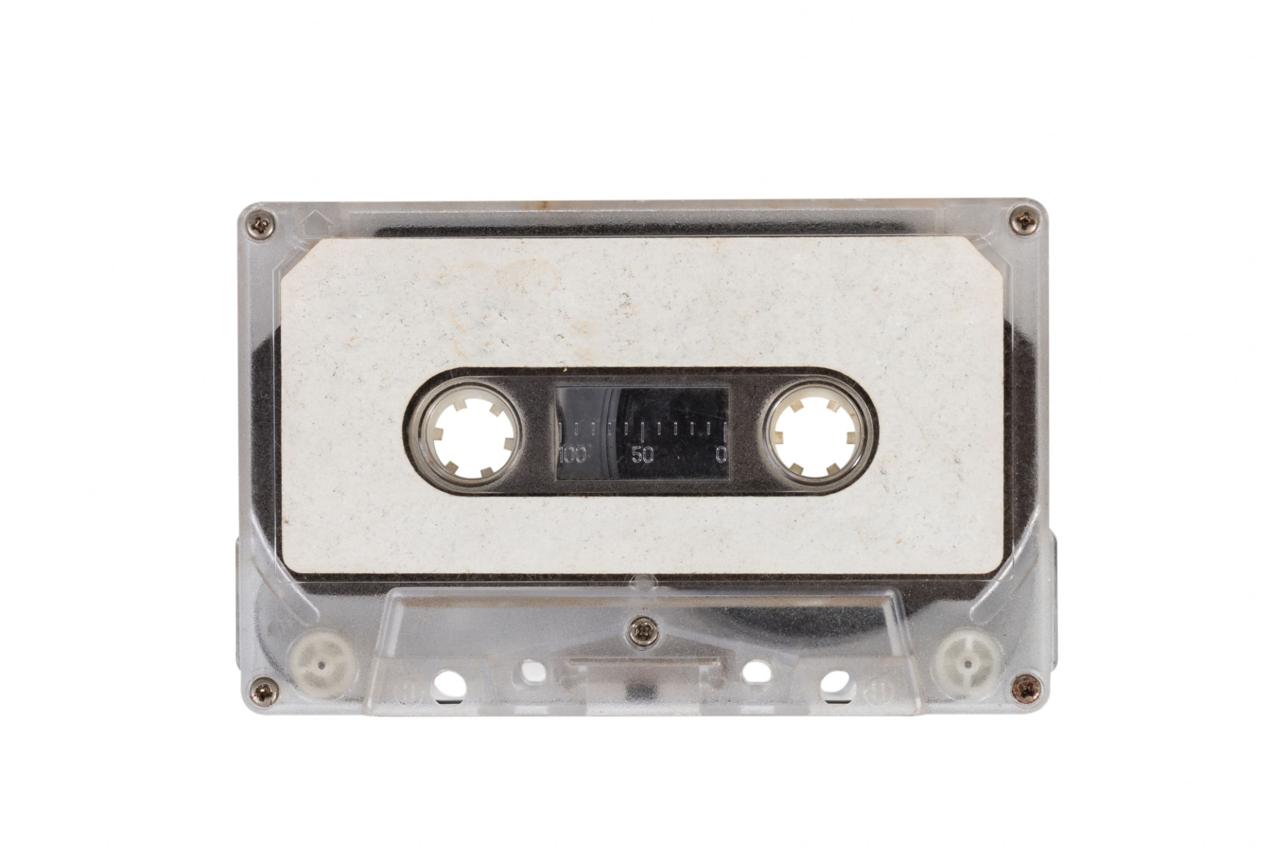
He had been looking through some old cassette tapes for something entirely unrelated when he came across an unmarked tape. On it were recordings from The Music Arcade — including the blackbird song!

Even more wonderfully, he remembered our exchange from seven months earlier and took the trouble to convert the recordings to MP3 and send them to me.

Bless him for that.

The first recording even comes complete with an unmistakable bit of BBC continuity:

“This is Daytime on Two. Time now to visit The Music Arcade, to listen to some vocal sounds.”

Hearing that alone is oddly transporting. There is something about the sound of old BBC schools television — the continuity voice, the slightly formal presentation, the piano and orchestral arrangement — that instantly evokes classrooms, television trolleys and programmes watched in the middle of an ordinary school day.

And then there’s the song itself.

It is exactly the song I remembered, albeit with a female vocalist, while the version in my head has always featured a male voice — presumably one of our teachers.

There are a few more orchestral flourishes than our primary-school production managed, unsurprisingly, but the tune (or lack thereof) is unmistakable. More gratifyingly still, the lyrics I had been carrying around in my head for all those years weren’t merely close. They were spot on:

The blackbird sings a tuneful song,
With turns and trills so fine;
Such skill has he, such majesty,
But it’s not as good as mine!

When Paul first commented, he wondered whether the third line might have been “such talent has he, such artistry”. It turns out that, on this occasion at least, my memory had preserved the original wording with remarkable accuracy.

The recordings also confirm the wider story. Harlequin is trying to trick Pantaloon in a song competition, and the rival composition really is the deliberately dreadful one-note song I remembered. After decades of wondering whether I had merged several childhood memories together, there it all is: Harlequin, Pantaloon, the blackbird, the stolen song, the competition and the gloriously terrible alternative.

There is something rather strange about hearing a piece of music that has existed for so long only as an internal recording. Usually, rediscovering something from childhood reveals how much memory has altered it. The voice is different, the tempo is wrong, or the remembered fragment turns out to bear only a passing resemblance to the real thing.

In this case, pressing play didn’t replace my memory with the original. It confirmed that the original had been there all along.

The ending is also almost comically appropriate. In my previous post, while describing how easily school music vanished in the years before digital archives, I wrote:

Fold up the lyric sheets.
Box up the cassette.
Move on to the next term’s topic.

And that, apparently, is more or less what happened.

The recording survived not in an online archive or a carefully labelled collection, but on an unmarked cassette Paul happened to find while searching for something else.

The cassette had been boxed up. It was simply waiting for the right person to open the box again.

My original 2011 post was effectively a message in a bottle. Fourteen years later, I sent out another one. This time Paul found it. His own memory led him to the blog, and months afterwards a chance encounter with an anonymous cassette completed the story.

So the lost blackbird song is lost no longer.

And after all these years, the blackbird still sings a tuneful song — with turns and trills so fine.

Huge thanks to Paul for reaching out and sharing these recordings. Maybe we aren’t the only two people out there with this song living rent-free in our heads, and this will prove some kind of therapy for others!

Categories: Blog | Tags: , , , , , | Leave a comment

The brown belt that never was

Somewhere in my teenage years there was a version of me who was going to be a brown belt at judo.

I know this because I’d already bought the belt.

I was a blue belt by then and brown was next. I hadn’t actually earned it, obviously, but apparently I was sufficiently confident in the inevitable march of progress that buying one in advance seemed perfectly reasonable.

I never wore it.

There wasn’t a dramatic ending to my judo career. I didn’t get injured, fall out with anybody or decide that judo and I were finished. I just became a teenager. Other things gradually became more interesting and, at some point I can’t even remember, I stopped going.

I’ve occasionally wondered what happened to that brown belt. More recently I’ve started wondering what might have happened if I’d actually worn it.

How I ended up doing judo in the first place is another slightly hazy childhood memory. My brother Rich had started going to karate lessons and I dimly remember going along and watching. In my memory at least, it bore a slightly alarming resemblance to Cobra Kai from the original Karate Kid film: lots of shouting, discipline and an instructor who seemed considerably more frightening than anybody involved in a children’s hobby had any obvious need to be.

Whether it was actually like that or whether forty years of memory and repeated exposure to The Karate Kid have gradually merged the two together, I couldn’t possibly say.

Either way, we didn’t become karate kids.

Somehow judo entered the picture instead, and Rich and I ended up at Nottingham Olympic Judo Club on St Stephen’s Road in Sneinton.

It was walking past there recently that started me thinking about all this again. The old club is flats now, because apparently nearly forty years is sufficient time for the world to rearrange itself without asking permission. Seeing the building again dislodged a collection of names I hadn’t properly thought about in decades.

Our instructors were John Mewett and Dave Lawrence. I could probably make this sound rather more martial-arts-like by referring to them as Sensei Mewett and Sensei Lawrence, but that isn’t how I remember them. They were John and Dave. That’s what we called them then and that’s still how they exist in my head.

I had no real idea who Dave and John were outside that room. Why would I? Adults don’t really have biographies when you’re a child. They’re just the adults who happen to occupy a particular part of your world.

There was Bruce too, older than us, dark-haired and exceptionally good. I remember him as something of John’s protégé. John’s son Dan trained there as well, although I’m not sure I ever thought of him as Dan. He was Diggy.

Then there was Rolly and his sister, whose name frustratingly refuses to come back to me. I remember her, though, not least because she managed to break her collarbone during one of our club trips, which is an unfortunate way to ensure you remain part of somebody else’s childhood memories even after they’ve forgotten your name.

There was Siân, on whom I had a bit of a crush, and her sister Karen. I’m sure there were others. Perhaps their names will come back tomorrow while I’m making a cup of tea or doing something else entirely unrelated.

It’s peculiar which names survive.

One of the strangest additions to that list came more recently. A friend called Mark, whom I met many years later through an entirely different part of my life, happened to mention that he’d trained at Nottingham Olympic too, at around the same time. Neither of us remembers the other being there. Perhaps our periods at the club didn’t quite overlap. Or perhaps we stood ten feet apart every week for years without ever really noticing one another.

I rather like the possibility that we did.

At the time, of course, none of us were nostalgic characters in somebody’s future story. We were just kids doing judo.

Nearly forty years later, naturally, I disappeared down a rabbit hole.

It turns out John and Dave weren’t simply two blokes who happened to be good at judo. John had been a British lightweight champion and competed at high level himself before becoming heavily involved in coaching, apparently spreading himself across something of a Venn diagram of clubs and schools around the East Midlands.

Dave had considerable pedigree of his own. He’d been a three-time British Open champion and represented Great Britain internationally. Between them, Rich and I had somehow wandered into a little judo club in Sneinton and ended up being taught by two men who’d operated at the top end of British judo.

We had absolutely no appreciation of this at the time.

John was John. Dave was Dave. They were the blokes who taught us judo.

Bruce really was as good as I remembered too. He went on to become a British junior champion, joined the national squad and competed internationally. Better still, in a contemporary newspaper interview he specifically credited John with giving him his start.

Again, none of this particularly impressed the younger me because I didn’t know any of it.

We even made a club trip down to the Budokwai in London. At the time I knew it was a famous judo club and that going there was exciting. Only now do I appreciate quite what sort of place we’d been taken to: one of the oldest and most important judo clubs outside Japan, and somewhere John himself had trained and competed as a young man.

Mostly I remember that Rolly’s sister broke her collarbone. I want to say her name was Emma, but I can’t be sure.

Children are remarkably unimpressed by history while they’re standing in it.

I stuck at judo for quite a long time and, without wishing to blow the trumpet of a considerably younger version of myself, I was actually quite good.

I’m comfortable saying that now because sufficient time has elapsed for it not to constitute boasting.

I was built slightly differently then too. I was tall and thin, and because judo grouped us by weight rather than height I frequently found myself facing opponents who were considerably shorter and chunkier than me. They generally had a lower centre of gravity and could be bloody difficult to shift.

Eventually I discovered a throw that suited me perfectly.

Tsuri-goshi.

My height suddenly became useful. I could reach over an opponent’s shoulder, grab their belt, turn and get my hips underneath them before lifting them over.

Always the same way.

Over the shoulder. Grip the belt. Turn. Right hip underneath.

It became my speciality.

Years later I needed a fairly intensive course of osteotherapy to sort out problems around my hips and pelvis. Apparently repeatedly twisting my growing body violently in one direction while using it to launch other human beings through the air may not have been entirely consequence free.

Who knew?

There are other fragments that come back now I’ve started thinking about it. Gradings. Randori. The feel of a judogi. Japanese names for techniques, some of which remain instantly familiar while others have disappeared completely. The slow progression through different coloured belts.

Although, as I’ve discovered while disappearing down this particular rabbit hole, even my memory of that progression isn’t quite right.

As a junior I was on the Mon grading system. You didn’t simply work through a succession of adult coloured belts. There were eighteen Mon grades, represented by coloured belts and then coloured tabs added to them as you progressed.

I’d reached 15th Mon.

Blue belt, three red stripes.

There were only three Mon grades left.

Brown belt – one tab, two tabs, three tabs – then surely black?

At least, that’s how it appeared to me at the time.

I don’t remember us using red belts at all as juniors. We started with white, then progressed through the colours and tabs. Brown therefore felt significant because in my child’s understanding of martial arts there was only really one meaningful destination beyond it.

Black.

I’d vaguely assumed I’d get the brown belt, carry on progressing and eventually there would be some junior version of a black belt waiting for me.

Only now do I realise there was a rather important complication approaching. At sixteen I’d have moved out of the junior Mon system and into the senior Kyu grading system.

And rather wonderfully, having spent years proudly working my way upwards through the colours, I’d effectively have found myself going backwards through them.

The Kyu grades count down towards first Kyu. Brown, Blue, Green, Orange, Yellow, Red.

Only after that do you reach the Dan grades.

Only then does the coveted black belt finally appear.

So the brown belt I’d bought wasn’t actually the penultimate step on an uninterrupted march towards black at all.

It was the end of one childhood grading system, just before another one began.

I find this oddly delightful.

The younger me had bought a brown belt for a future he thought he understood, completely oblivious to the fact that the rules were about to change.

Still, within the world I actually inhabited then, brown was next.

So I bought the belt.

Presumably I thought I’d need it soon enough.

Then something happened.

Or, more accurately, nothing happened.

That’s perhaps the strangest part when I look back. There was no final session that I knew was the final session. I can’t remember putting my judogi away for the last time. I can’t remember telling Dave or John that I wasn’t coming back. There was no conscious decision that this thing I’d spent years doing was over.

I just became a teenager.

Interests change remarkably quickly at that age. Things which have occupied enormous portions of your childhood suddenly find themselves competing with friends, girls, music, laser quest probably and the increasingly exciting business of becoming whatever you think an adult is supposed to be.

Judo lost.

And somewhere there was a brand-new brown belt waiting for a grading that never happened.

It’s tempting when looking backwards to imagine that every road you didn’t take led somewhere extraordinary. It probably didn’t.

Perhaps I’d have passed that grading, earned my brown belt and packed it in six months later anyway. Perhaps I’d have moved into the Kyu system and discovered that starting again wasn’t nearly as appealing as I’d imagined. Perhaps Dave or John would have encouraged me to compete more seriously. Perhaps I’d finally have started going to those area gradings. Maybe I’d have stuck with it into adulthood.

Maybe I’d eventually have made it through the Kyu grades to Dan.

Maybe I’d still be doing it now.

There’s an alternative version of me somewhere who spent another forty years on the mat, eventually becoming the middle-aged bloke standing at the edge of a dojo teaching another generation of lanky teenagers how to deal with opponents built considerably closer to the ground than they are.

Although, knowing me, there’s an equally plausible alternative reality where I got my brown belt, discovered beer the following weekend and never set foot on a mat again.

That’s the trouble with lives you didn’t live. They’re remarkably accommodating to whatever story you want to tell about them.

Writing all this did have one unexpected consequence, though.

I mentioned to Mum and Dad that I was writing about the old judo club, and they went digging.

This was before digital photography, of course, when photographs were things you took rather more sparingly and then entrusted to envelopes, albums and drawers for the next forty years.

But somehow they’d survived.

And there I was.

Tiny, solemn and wearing a judogi.

There was Rich and me together in our early belts. There were glimpses of the club itself, looking simultaneously exactly as I remember it and strangely less cavernous and massive.

And there was me holding a little gold trophy.

Even better, the label on the front has survived:

JUDO WINNER
1986
ALAN FISHER

So apparently I wasn’t entirely imagining being quite good.

There were photographs from birthday parties we’d had at the club too, which unlocked another memory I’d completely forgotten.

Moon Rides.

A Moon Ride involved partially inflating one of the club’s enormous inflatable pieces of apparatus, placing a child at one end and then having an adult launch themselves from a considerable height onto the other.

The resulting displacement of air propelled the child upwards.

Sometimes very upwards.

It was the 1980s. Improvised trebuchets for launching children bodily into the air were fine.

Apparently this constituted organised entertainment.

One photograph captures Chris, dad of my childhood friend David, in full flight towards the thing, about to send whichever unfortunate child was lying at the other end into low Earth orbit. He looks like an Eagle about to take his prey.

Chris sadly isn’t with us any more.

Which makes the photograph rather more precious than anybody taking it could possibly have imagined at the time. He’s just somebody’s dad arsing about at a children’s birthday party, suspended in mid-air for a fraction of a second. Dave looking on from the sidelines with a look of genuine concern on his face.

And nearly forty years later, there he still is.

That’s perhaps the strangest thing about going looking for your childhood. You start with the things you remember, and occasionally they lead you back to things you’d completely forgotten.

And there’s another road not taken before any of that.

Had Rich not tried those vaguely Cobra Kai-ish karate lessons, perhaps we’d never have found judo at all.

No Nottingham Olympic.

No Dave or John. No Bruce or Diggy. No Rolly and his unfortunately unnamed sister. No Siân or Karen. No trip to London. No tsuri-goshi. No osteopath wondering years later why my hips had apparently spent my adolescence being pulled in one direction.

And no brown belt that never was.

I don’t particularly regret stopping. It’s difficult to regret a decision I don’t even remember making, and the things that gradually replaced judo became parts of the person I actually became. Had I carried on, something else might have been squeezed out instead.

But I do wonder.

That’s probably why the brown belt has stuck in my memory. I don’t know where it is now, or even when it disappeared. Perhaps Mum and Dad eventually threw it away. Perhaps I did. It doesn’t really matter.

What interests me is what it represented.

I bought it for a future version of myself because, at the time, becoming him seemed inevitable. He was going to pass that grading. Then, although he didn’t actually understand it yet, he’d leave the Mon system behind and start working his way through Kyu. Perhaps eventually he’d reach Dan. Perhaps he’d keep going for the rest of his life.

He never existed.

Instead, nearly forty years later, I walked past an old dojo in Sneinton that’s now been turned into flats and suddenly remembered Dave and John standing at the edge of the mat, Bruce being irritatingly better than the rest of us, Diggy and Rolly, Rolly’s sister and her unfortunate collarbone, and Siân, on whom younger me had a rather more-than-judo-related interest. I remembered Karen too, and discovered that Mark and I might have been sharing the same mat years before either of us remembers meeting.

I remembered travelling down to London. I remembered being tall and skinny and invariably finding myself opposite somebody shorter and considerably chunkier.

And, most vividly of all, I remembered exactly what I’d do about it.

Reach over the shoulder. Grab the belt. Turn.

Right hip underneath.

Tsuri-goshi.

Some things apparently stay with you.

I still never earned that bloody brown belt, though.

Categories: Blog | Tags: , , , , , | 1 Comment

🎼 The Lost Blackbird Song: A Follow-Up on a Musical That Barely Exists

Back in 2011, I wrote a little blog post about a song I remembered from primary school. Nothing grand, nothing with a Wikipedia page, nothing anybody outside a generation of classrooms would ever have heard of. Just a strange little musical number from the mid-to-late 80s, sung by a bunch of children who almost certainly had no idea what they were performing.

The only lyrics I could recall were:

“The blackbird sings a tuneful song,
With turns and trills so fine,
Such skill has he, such majesty,
But it’s not as good as mine.”

And for years, that fragment has lived rent-free in my head — a dirge-like, slightly smug verse from a “fake song” written by a character inside a school musical. As best as I can remember, the plot involved a composer who knew he was being spied on, and so he deliberately wrote a terrible dirge to trick whoever was trying to copy him.

It was clever. It was funny. It was, in its own tiny way, art.

And yet… it seems to have vanished from the universe.

🕳 A Song That Fell Through the Cracks

When I say vanished, I mean properly vanished.

You can usually find anything online these days — half-remembered TV jingles, obscure adventure game walk-throughs, the full lyrics to commercial jingles that aired once in 1984. But this? This little school musical? Nothing.

  • No recordings.
  • No sheet music.
  • No mention in BBC Schools Radio archives.
  • No teachers’ resource PDFs.
  • No nostalgia forum threads.
  • Not even a throwaway reference in a Reddit comment.

Just my 2011 blog post… and my own memory, which has been clinging to that blackbird verse like a last surviving witness.

It’s completely mad when you think about it. Someone, somewhere, sat down in the 1980s and wrote this musical. They composed melodies, crafted characters, wove a plot about artistic pride and deception. They sent the work out into classrooms, where children in school halls around the UK sang their hearts out to it.

And now, nearly forty years later, the only evidence it ever existed is a few lines stuck in my head and an old blog entry on a site best known these days for dormancy and a very occasional burst of random recollections.

🎨 The Quiet Tragedy (and Beauty) of Lost Creativity

There’s something strangely beautiful about that.

We tend to think art only “matters” if it becomes part of the cultural machine — if it’s recorded, archived, written about, remastered, reposted, commented on, placed onto a shelf somewhere.

But so much creative work — especially in schools — is ephemeral by design:

  • Perform it once in assembly.
  • Stick the poster on the corridor wall.
  • Fold up the lyric sheets.
  • Box up the cassette.
  • Move on to the next term’s topic.

No cameras in every parent’s hand.
No YouTube to immortalise it.
No cloud storage full of forgotten MP3s.

Just a moment that existed briefly, fully, joyfully… and then dissolved.

And yet here I am, decades on, still humming “but it’s not as good as mine,” still wondering who wrote it, and still moved by the idea that I might be the last person on Earth who remembers it.

There’s something quietly touching in that — a reminder that even small, fleeting acts of creativity can lodge themselves somewhere deep.

🔍 So Here’s My Hope…

I’m posting this in the faint hope that someone, somewhere, might Google a lyric snippet, or remember doing that musical in the 80s:

  • The one with the composer.
  • The spy.
  • The fake dirge.
  • The hilariously pompous blackbird song.

If any of this rings a bell — even a faint one — please get in touch. I would love to give this little fragment its proper title, its composer, its context, and maybe even its full lyrics.

Because right now, this tiny piece of someone’s genuine creative work is balanced on one wobbly stool: my memory.

And I think it deserves at least a small place on the internet — somewhere safer than the inside of my brain.

Categories: Blog | Tags: , , | 3 Comments

Blog at WordPress.com.