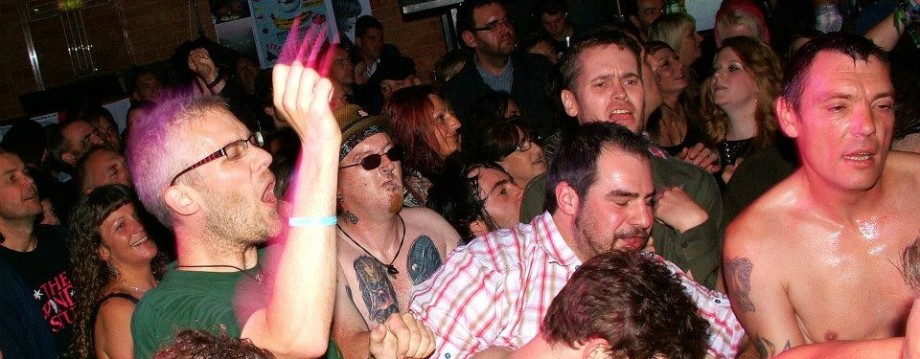
Title irresistibly pilfered from the excellent Gaz Brookfield’s ‘Limelight’
I’ve always hated the term “Hell Hounds”.
For the uninitiated, it’s a name adopted by some of the more dedicated followers of Ferocious Dog. There’s absolutely nothing wrong with it. People like belonging to things, people like having names for the things they belong to, and if calling yourself a Hell Hound makes you happy then you should absolutely crack on.
But it makes me cringe.
Worse still is anything along the lines of “a proper Hell Hound would…” or “all Hell Hounds think…”
Ugh.
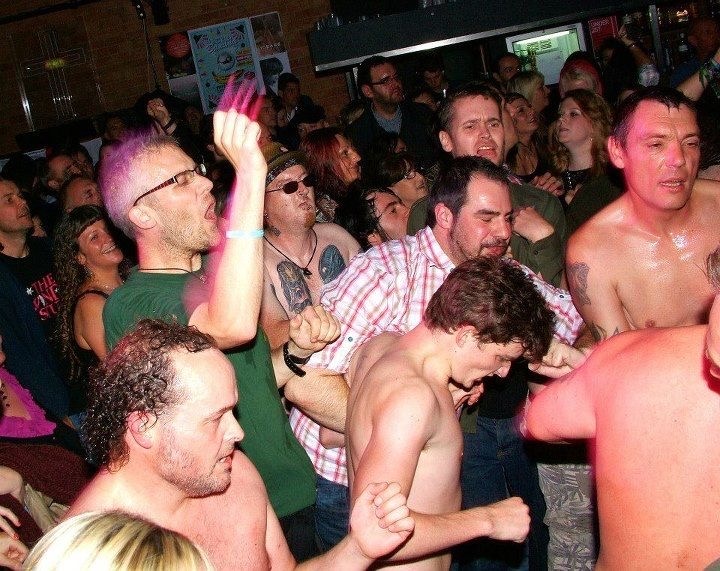
A warning before we go any further: this is going to be an unusually self-indulgent post.
Most things I write here might start with me, but generally wander off fairly quickly towards a place, a memory, a bit of history or whatever other rabbit hole has caught my attention. This one is, unapologetically, about me. Almost entirely.
I’ve recently been rummaging through an extraordinary amount of detritus left behind by younger versions of myself – old fanzines, university records, ancient websites, forum posts and blogs – and somewhere along the way I realised I’d inadvertently assembled something approaching a thirty-year archive of how I thought, what interested me and where I chose to spend my time.
So naturally, rather than doing anything sensible with this information, I decided to conduct an amateur psychological investigation into myself.
What could possibly go wrong?
The starting point for this particular bout of navel-gazing was something I’d previously filed away as just another one of my quirks.
Why does something as innocuous as “Hell Hounds” irritate me quite so much?
And in trying to answer that, I stumbled into a much bigger question about something I’ve done for most of my life.
I’m not sure I’m very good at belonging.
Which probably sounds ridiculous to anybody who knows me.
I’ve spent huge chunks of my life immersed in communities. As a teenager I was involved with my brother’s Nottingham Forest fanzine, Forest Forever. Later I helped establish the Lost That Loving Feeling forum and became part of the community that grew around it. I wrote anonymously about Forest for years on another blog. As football gradually became less important to me, music increasingly took its place and I spent years travelling around the country and beyond watching Ferocious Dog, started Ferocious Blog, acquired another sprawling collection of friends, a life partner, and eventually even ended up playing in a band myself.
Alongside all of that, in various incarnations, domains and bits of increasingly obsolete internet technology, I’ve maintained a personal website or blog for most of my adult life.
So I’m hardly a hermit.
And yet there’s a pattern here that goes back much further than any of those things.
Clique hopping
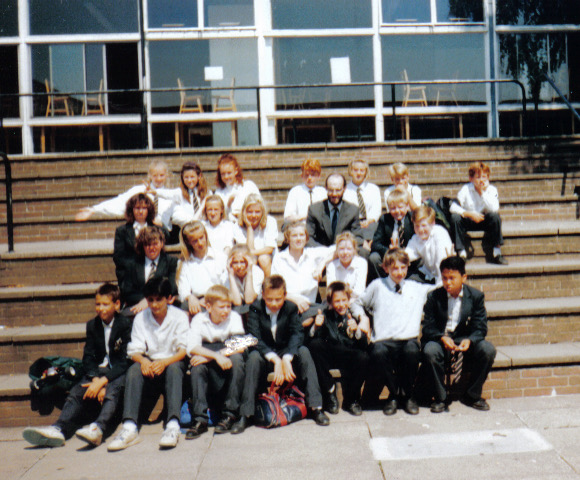
At secondary school I was a serial clique-hopper.
I had friends in lots of different groups without ever feeling completely embedded in one. I probably never fully penetrated the genuinely cool groups, and certainly not the particularly sporty ones, but I was generally on good terms with them. I could move between groups reasonably comfortably.
At the time I don’t remember thinking there was anything significant about this. Why would I? They were just my friends.
Looking back, though, I’ve sometimes wondered whether there was a strategy buried in there that I didn’t consciously understand.
If you’re friendly with everybody but never invest your entire social identity in one group, nobody can completely reject you.
Was that what I was doing?
I genuinely don’t know.
There’s an obvious danger when rummaging around inside your own childhood from the vantage point of several decades later. Memories aren’t data, and it’s remarkably easy to retrofit an elegant explanation onto behaviour that was actually just a teenager wandering around talking to whoever happened to be there.
But the pattern didn’t entirely disappear.
I’ve continued to move quite comfortably between groups of people throughout my life. I can become heavily involved with a community without ever quite planting a flag and thinking: these are my people; this is where I belong.
Or perhaps that isn’t quite right either.
Maybe I don’t have a problem belonging.
Maybe I have a problem claiming that I belong.
Know your place
I notice it particularly around people who attract attention.
If I know somebody who happens to have a crowd of people wanting to speak to them, I will almost invariably concede the space.
There are perfectly reasonable motives for that. I’ve probably had plenty of opportunities to talk to them before. The person waiting might not have. Their time isn’t mine to monopolise.
But if I’m being completely truthful, there’s another calculation going on too.
Who am I to assume they particularly want to talk to me?
And perhaps even more revealingly: I absolutely do not want the people around them to think I’m hanging around simply because they’re somebody worth hanging around.
Which can create the slightly ridiculous situation where my relationship with somebody is being influenced by the imagined judgement of complete strangers who know neither of us.
To assert I actually know this person feels hideously self-important, even when it is simply an unremarkable statement of fact.
So I tend to step back.
The other person may not be conducting any of these calculations whatsoever. They might simply see me and think, there’s Al.
Meanwhile I’ve convened a committee meeting in my head to establish whether I have sufficient standing to say hello.
A proper Hell Hound
Which brings me back to those bloody Hell Hounds.
I don’t actually dislike communities. The evidence against that proposition would be overwhelming. I’ve spent much of my life joining them, helping to create them and documenting them in frankly unnecessary levels of detail.
What I really dislike, I think, is what can happen when membership becomes an identity and the identity starts acquiring rules.
A proper fan would…
People like us think…
You can’t call yourself a real supporter if…
Something inside me immediately responds:
Who the fuck put you in charge?
This turns out not to be an entirely unexplored psychological phenomenon.
In 1991, psychologist Marilynn Brewer proposed Optimal Distinctiveness Theory. In extremely simplified terms, it describes a tension between two social needs: we want inclusion and belonging, but we also want to retain our individuality. We therefore negotiate a comfortable distance between being part of the group and being swallowed by it.
That struck a chord.
I want to be able to love a band without having to love every record they make. I want to disagree with other fans without having my credentials checked. I don’t care how many gigs somebody has attended, whether they were there “before they got big”, whether they know members of the band or whether they bought the limited-edition commemorative tea towel.
And I certainly don’t think doing any of those things gives me the right to tell somebody else how they should enjoy the same thing.
Belonging is fine.
Terms and conditions apply? Not so much.
An accidental longitudinal study
The problem with amateur self-analysis is that it’s incredibly easy to talk yourself into whatever conclusion appeals to you.
Fortunately – or perhaps unfortunately – I have something most people don’t have when attempting to work out whether they’ve behaved consistently over several decades.
I have an absolutely ludicrous amount of evidence.
I have been leaving bits of myself lying around on paper and the internet since I was a teenager.
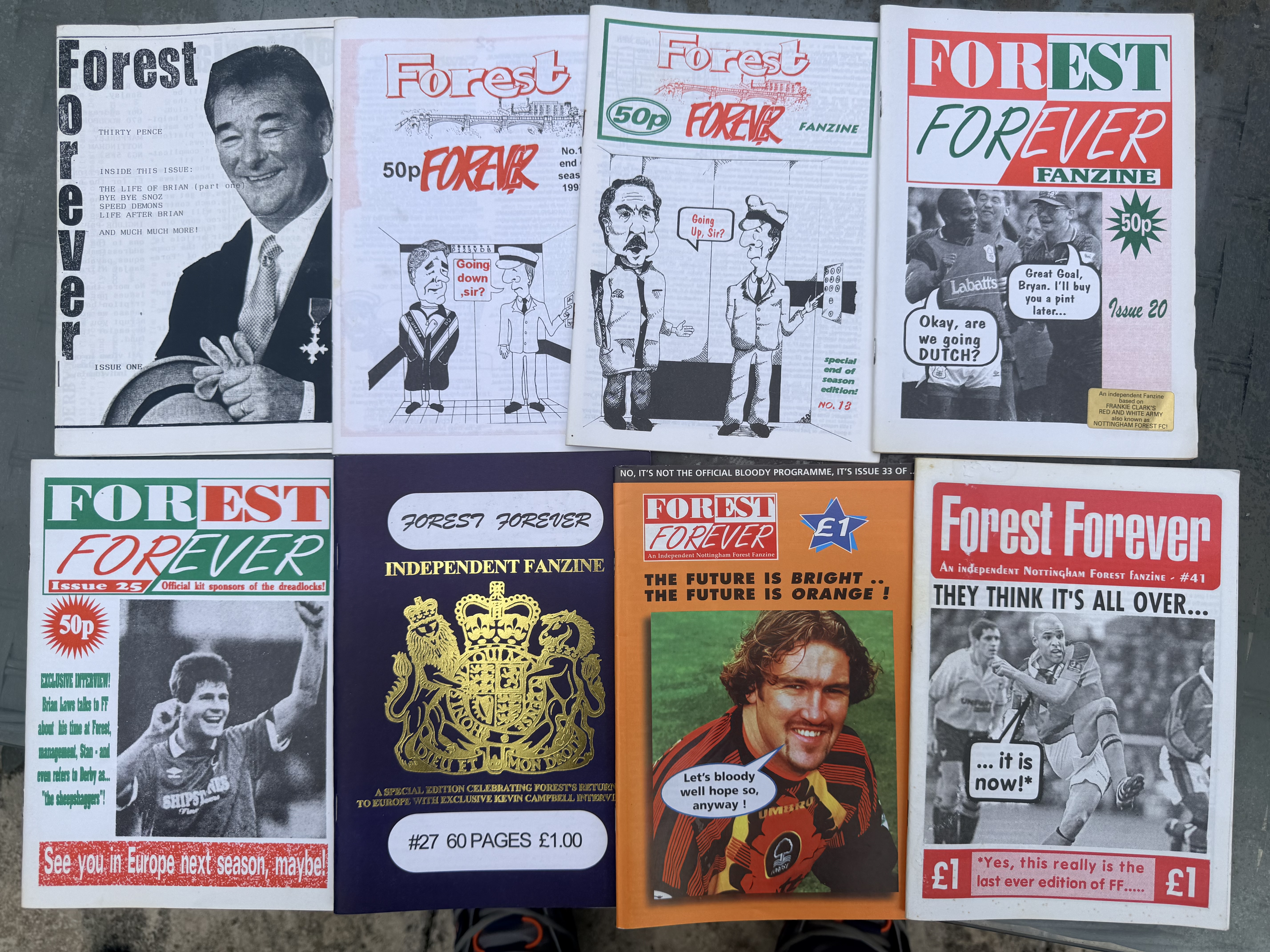
There are forty-one issues of Forest Forever in a box in the shed. There are old websites, forum posts, cartoons, abandoned domains, blogs, comments and articles. Some were written under my own name, some under usernames and one entire Forest blog was deliberately written anonymously.
My personal website has existed in one form or another throughout most of it, quietly accumulating whatever happened to interest me at the time.
More recently I’ve been digging through some of this detritus.
It’s an odd experience.
Normally when we remember our younger selves, we do so through the filter of everything that has happened since. I can tell you what I think I was like at 30.
But occasionally I can also ask 30-year-old me.
And he left several thousand words explaining himself.
The superficial story is one I’ve sometimes been slightly unkind to myself about.
I flit.
Forest Forever ends. Later there’s LTLF. Then an anonymous Forest blog. Then Ferocious Blog. Subjects change, platforms change, communities change.
There he goes again.
Another enthusiasm. Another project.
Can’t stick at anything.
Except the closer I’ve looked, the less convincing that interpretation has become.
Forest Forever largely ended because my brother went away to university. My first significant withdrawal from football coincided with the teenage discovery that girls were considerably more interesting than Nottingham Forest. My later disenchantment with Forest coincided both with increasing unhappiness about football and the club’s ownership and with music becoming an increasingly important part of my life.
Ferocious Blog eventually slowed down for different reasons again. Its original purpose – essentially to shout Ferocious Dog are brilliant and you should probably go and see them – became increasingly redundant as rather more people started doing exactly that. Covid disrupted the social world around it, the crowds grew, familiar faces became less ubiquitous and my own relationship with the band and scene changed.
Meanwhile I hadn’t stopped writing.
The personal blog was there throughout almost all of it.
It never really had a purpose, which might be precisely why it survived.
Same bloke, different subject
Something else became apparent while reading the old material.
The subjects change considerably.
The person writing about them rather less so.

My anonymous Forest blog contains endless examples of me worrying away at group consensus. Why has everybody decided this manager is an idiot? What do we actually know about this owner? Why are we assuming that player is motivated by greed? Where did this rumour come from? Why has everybody repeated it until it became true? Why does disagreement online so rapidly turn into abuse?
At the time I thought I was writing about Nottingham Forest.
Reading it years later, there’s an awful lot about crowds, identity, conformity, communication and the way groups construct their own versions of reality.
Then I wandered away from football and started writing about music.
Different subject.
Many of the same preoccupations.
Who belongs? Who decides? What makes somebody authentic? How do relationships change as a community grows? What happens when a loose collection of people starts acquiring labels, hierarchies, rituals and rules?
Apparently I’d changed obsessions without changing all that much.
Did university do this to me?
There’s another layer to this which I’m not sure how to untangle.
In the late 1990s I studied Communication Studies at Nottingham Trent University.
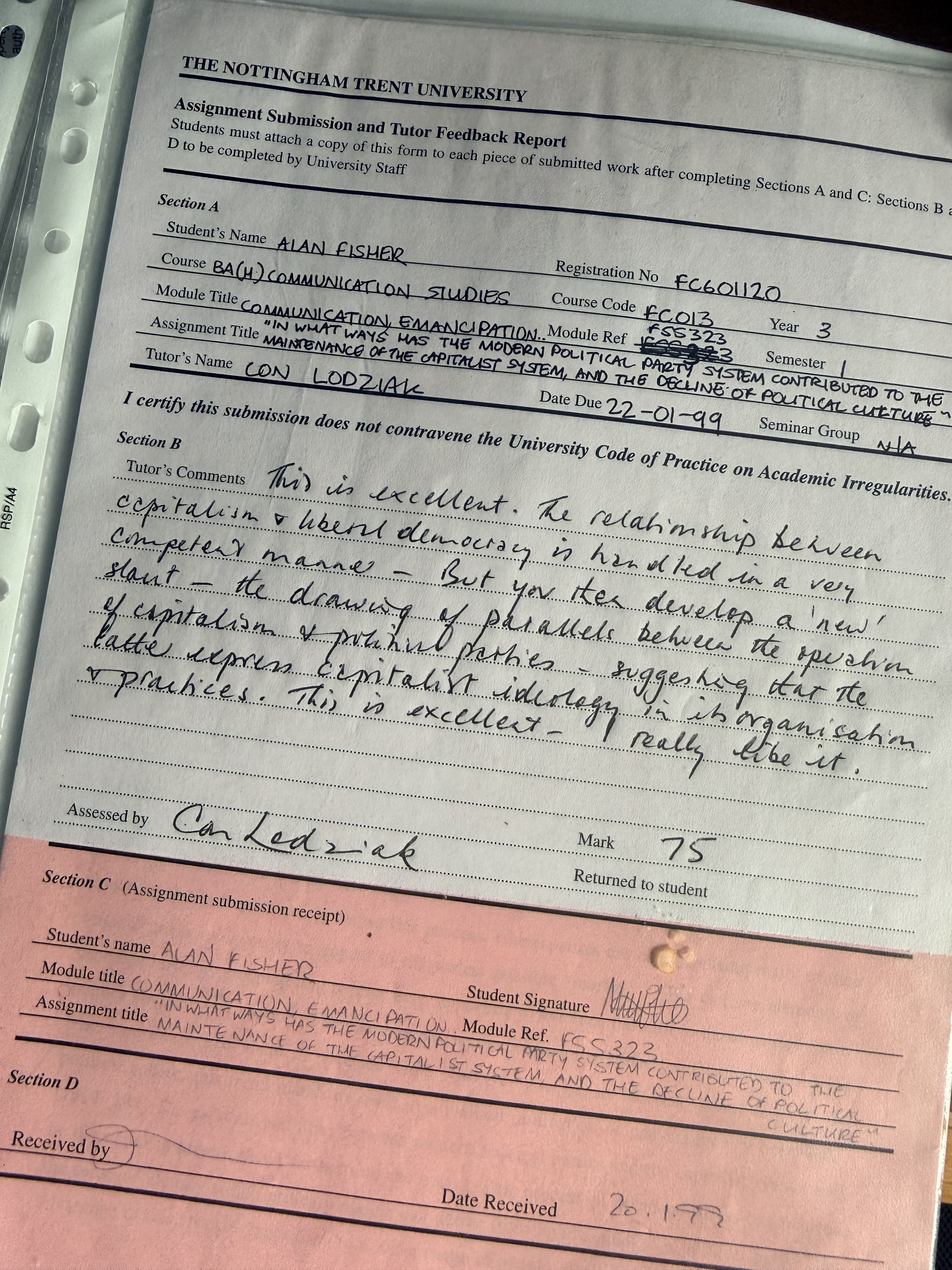
Recently I’ve also been looking back through my old academic record, and the subjects I chose and enjoyed now seem suspiciously familiar: Culture and Society, Sociolinguistics, Mass Media, Psychological Perspectives and various excursions into identity, language, culture and the ways people make sense of the world around them.
So which way round did that work?
Was I drawn to those subjects because I was already the sort of person fascinated by groups, identity and how people construct meaning?
Or did spending three years being encouraged to think about those things permanently alter the way I looked at the world?
I suspect the deeply unsatisfying answer is: both.
Perhaps university gave names and structures to questions I was already inclined to ask.
Or perhaps I’ve simply read my own subsequent history and retrofitted another convenient pattern onto it.
There’s a lot of that going on here.
An unreliable sociometer
Another idea from psychology made me slightly more uncomfortable.
Sociometer theory, developed by psychologist Mark Leary and colleagues, proposes that part of the function of self-esteem is to monitor our perceived relational value – essentially, how much we think other people value having us around.
If that’s even approximately right, I suspect mine may occasionally be calibrated a little pessimistically.
There seems to be a recurring tendency for me to demand more evidence than should reasonably be necessary before accepting positive conclusions about myself.
I’ve described myself as suffering from imposter syndrome at work.
Something similar happened with writing.
When I was heavily involved in Forest websites and forums, people occasionally told me they liked things I wrote. Rather than simply accepting this perfectly pleasant information, I wondered whether my established presence in those communities was influencing their reaction.
So I started an entirely anonymous Forest blog.
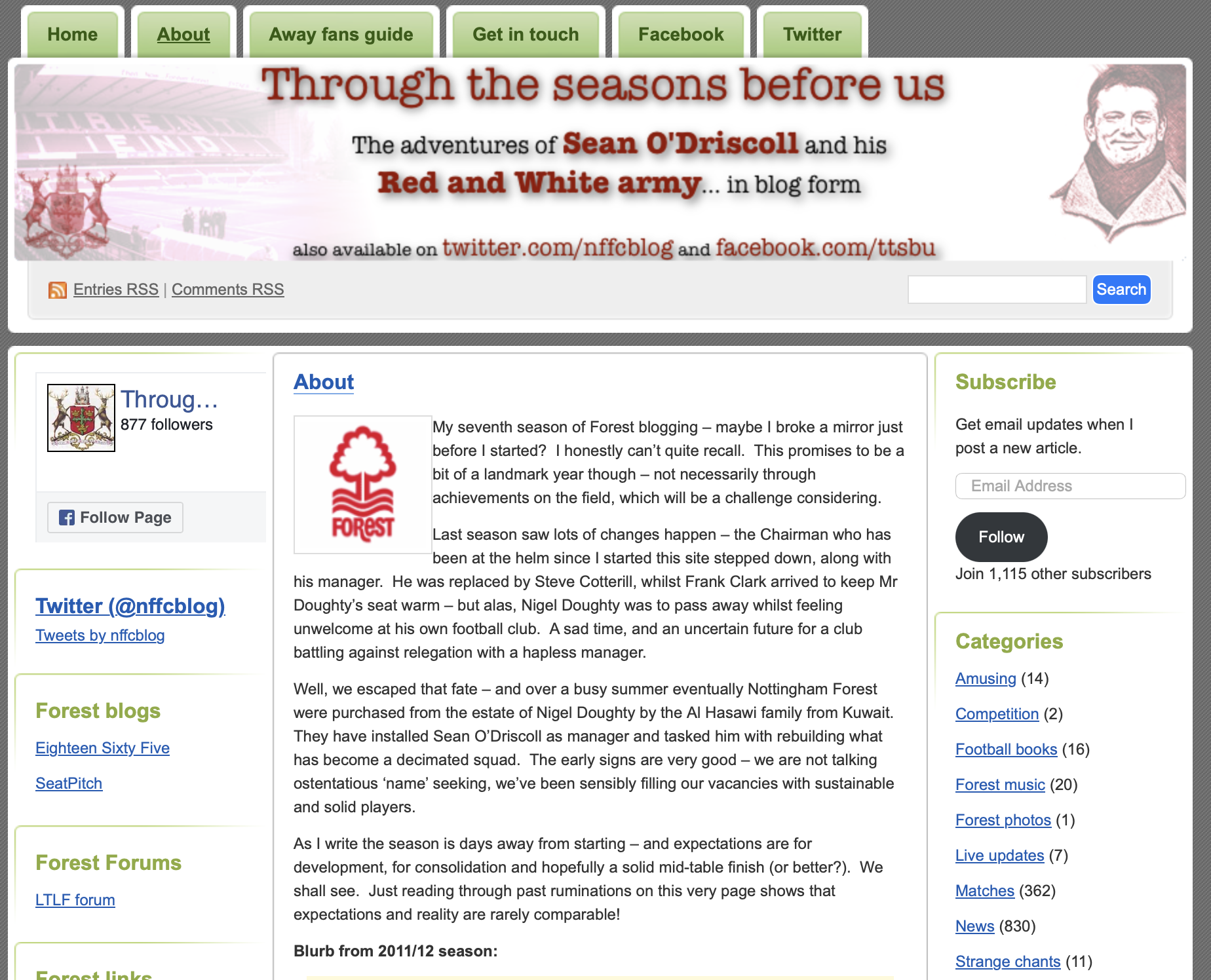
This was, although I didn’t describe it this way at the time, essentially an experiment designed to remove the confounding variable of me.
People read that too.
Quite a lot of them, as it happens.
Apparently confronted with evidence that contradicted my hypothesis, I responded in the traditional scientific manner by quietly moving on and finding other things to doubt about myself.
The bigger the crowd, the smaller the world
This also gives me a different way of thinking about my changing relationship with Ferocious Dog.
In the earlier years I could walk into a gig and recognise a ridiculous proportion of the people there. The same faces appeared everywhere. Gigs were gigs, but they were also reunions.
Then the band became more successful and the crowds became bigger.
This was obviously a good thing. I’d spent years writing a blog whose barely concealed purpose was to encourage precisely this outcome.
The bastards eventually listened.
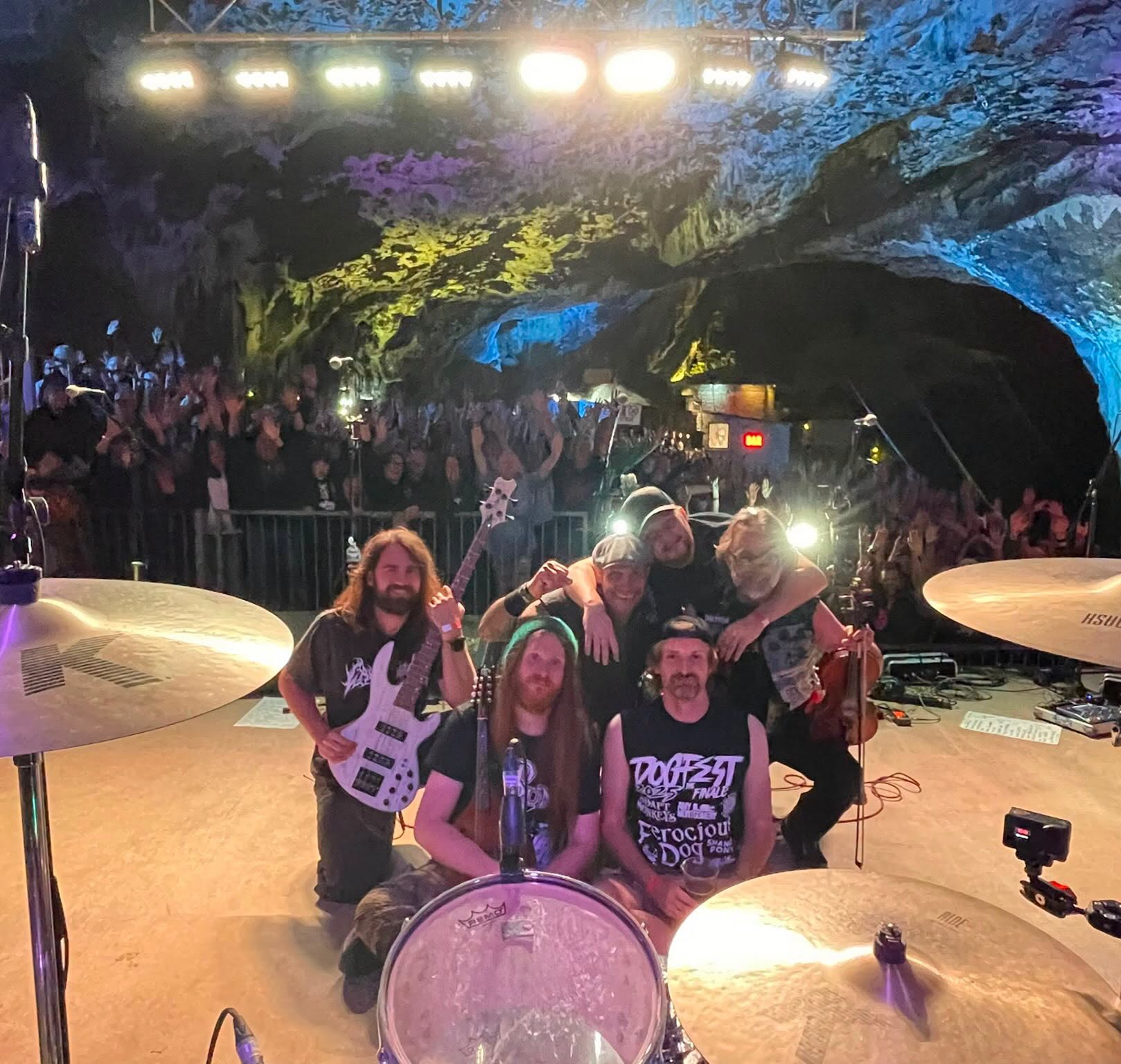
But something changed for me.
A room containing a thousand people who like the same band as me ought logically to contain more of “my people” than a room containing a hundred of them.
It didn’t feel that way.
There were fewer familiar faces proportionally. Less of the feeling of walking into a room and immediately knowing where you fitted. Covid accelerated the change. People came and went. Lives changed. Mine did too.
For a while I’ve explained that simply as losing some of my passion for the band, and there’s undoubtedly truth in that.
But perhaps something else diminished too.
Not membership of a fanbase.
The density of relationships within it.
Those aren’t necessarily the same thing.
Belonging, but not too much
So where does all this leave me?
Annoyingly, without a diagnosis.
I don’t know whether teenage me moved between friendship groups because it reduced the possibility of rejection.
I don’t know whether my reluctance to assert my place in adult relationships comes from the same place.
I don’t know how much is self-doubt, how much is politeness, how much is independence and how much is simply a personality that quite enjoys wandering between different groups of people.
I don’t even know whether I’ve discovered a pattern here or constructed one because humans are extremely good at finding patterns once they start looking for them.
But I do think I’ve been slightly unfair to myself in describing some of this as an inability to stick at things.
Look beneath the changing interests and there’s actually a surprising amount of continuity.
I’ve been writing and publishing things for most of my life.
I’ve repeatedly sought out communities and formed friendships within them.
I’ve repeatedly been interested in how groups behave.
And I’ve repeatedly resisted allowing membership of those groups to dictate what I’m supposed to think.
Maybe the clique-hopping schoolboy, the Forest fanzine cartoonist, the university student writing about culture and society, the anonymous football blogger, the reluctant Hell Hound and the middle-aged bloke writing increasingly self-indulgent essays on his personal blog aren’t quite as different as they initially appear.
Perhaps I’ve simply spent my life trying to find a comfortable distance from the groups I care about.
Close enough to form real attachments.
Far enough away to retain my independence.
And, sometimes, perhaps rather farther away than necessary because I haven’t quite trusted the evidence that other people actually want me there.
I’m not sure I particularly want to change the first two.
I might want to work on the third.
In the meantime, I’m perfectly happy to belong.
Just don’t make me wear the fucking badge.
 Goddammit
Recent Comments