
Posts Tagged With: nature

Walking through the Lagoons..

Over the last week I’ve found myself doing a lot of wandering. I think it’s time well spent when I have a few days off work. One walk leads to another, and before long you’ve found yourself revisiting places you haven’t properly thought about for decades.

Yesterday’s walk began somewhere that was familiar long before I reached the footpath.
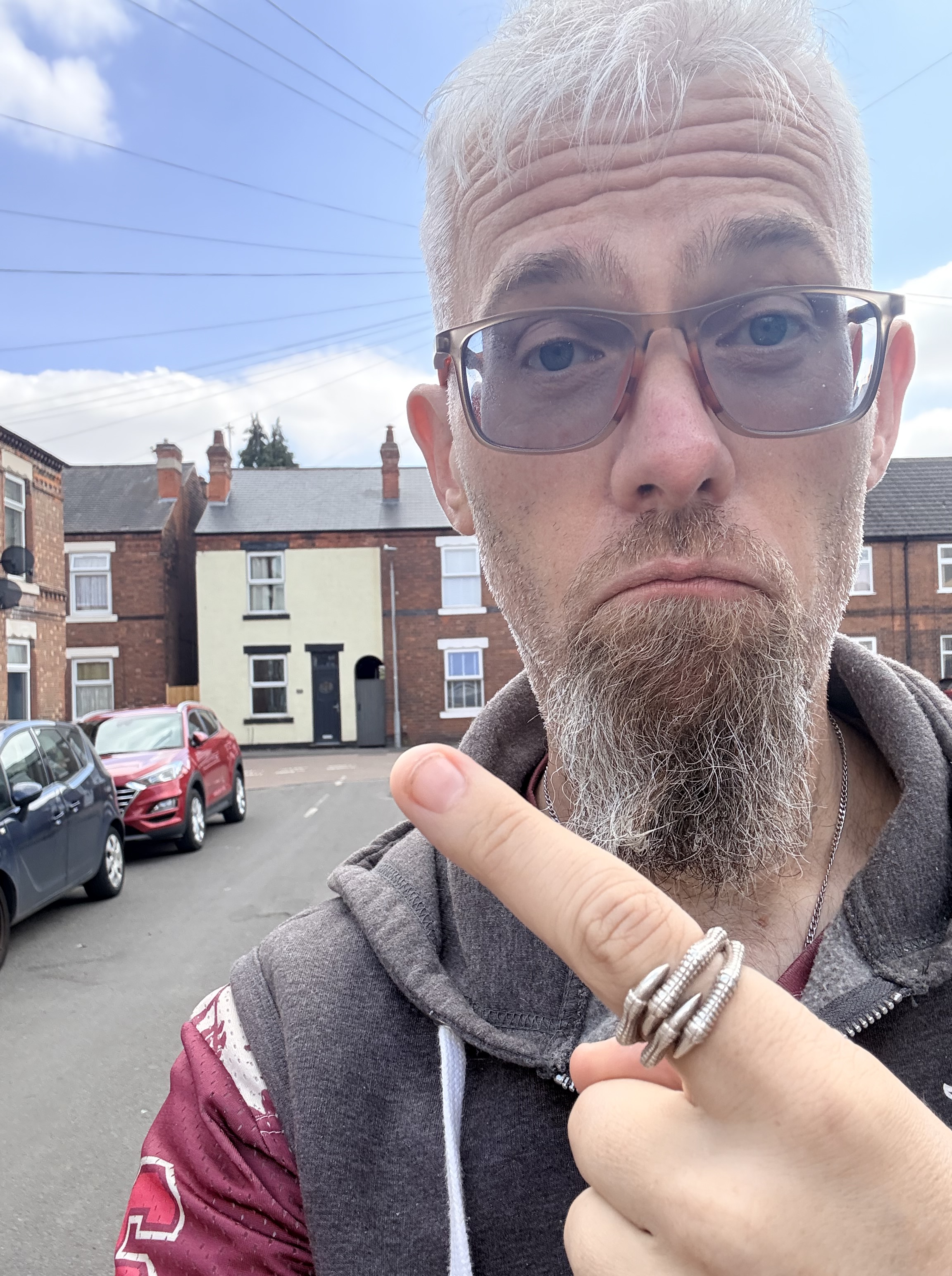
I parked on Godfrey Street in Netherfield, outside the first house I ever bought. It’s funny how ordinary somewhere can look once enough years have passed. At the time it represented everything that came with finally becoming an adult: my first mortgage, decorating rooms that were suddenly my responsibility, discovering just how many things can unexpectedly break when you own a house. Standing there yesterday it was simply another terraced street with cars lining the kerb. If I hadn’t lived there, I’d probably have driven straight past without giving it a second thought.

From there I wandered down towards Netherfield Lagoons.

If you’ve never visited, it’s a remarkably peaceful place. Reeds sway gently beside the paths, dragonflies dart over the water and birds seem to outnumber people. It’s difficult to imagine that this landscape was once anything else.

Yet that’s not how I remember it.

As children, Dad would occasionally bring Rich and me here armed with an air rifle and a pocketful of pellets. We weren’t hunting anything more exciting than tin cans balanced on old banks or tucked safely into whatever earthworks we could find. My memories are hazy now, but I remember rough ground, overgrown ditches and a landscape that felt forgotten rather than protected. There were railway lines too, active ones from memory, where crossing points seemed rather more casual than modern health and safety would ever tolerate.

Perhaps memory has exaggerated some of that. Perhaps I simply didn’t quite find the same corner yesterday. Either way, I found almost none of the landscape I remembered.

Instead there were butterflies drifting across wildflowers, birdsong replacing the metallic soundtrack I’d half expected, and cyclists, dog-walkers and birdwatchers quietly enjoying somewhere that has become one of Nottinghamshire’s loveliest nature reserves.

Walking beyond the lagoons and alongside the River Trent brought back another memory.

I remember meeting my uncle here while he was fishing. I couldn’t tell you whether he caught anything that day. I can’t remember what we talked about. I simply remember him sitting there, rod in hand, as though he’d always belonged beside the river. Funny how memory works like that. It often remembers the person far more clearly than the event itself.
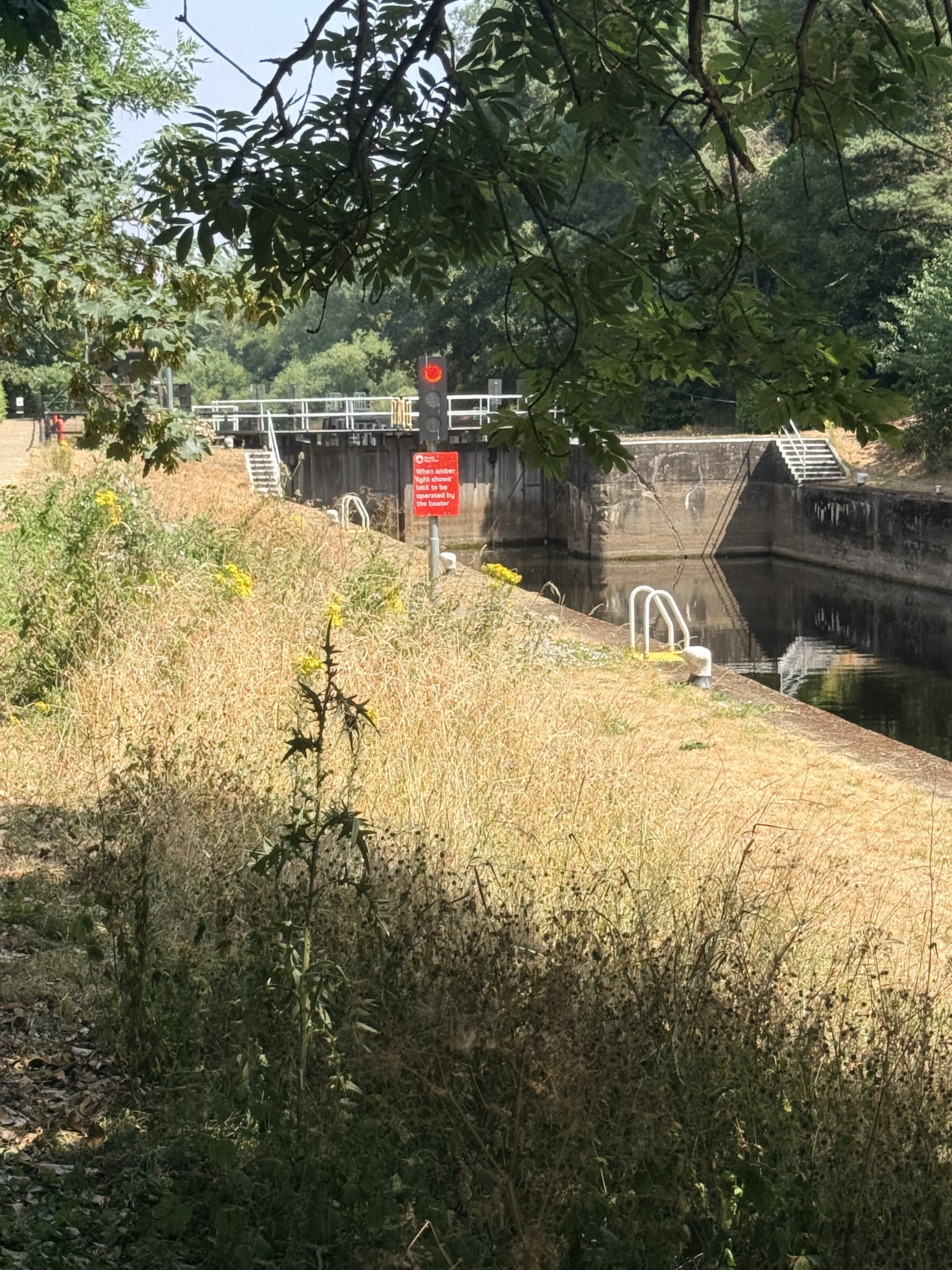
A little further downstream I reached Trent Lock, where the river briefly divides around the weir before boats continue their journey through the lock. It’s one of those pieces of engineering that quietly does its job without demanding much attention.

No boats were using the lock whilst I was there – which probably spared me from reliving a somewhat traumatic canal boat holiday from childhood. That’s perhaps a story for another day.

Leaving the river, the footpath heads back across the fields as you reach the village of Stoke Bardolph.

Most people know Stoke Bardolph for its water treatment works. As children, however, we had a rather less sophisticated name for it.

It was simply “the shit farm.”

Dad would occasionally bring us here too, where we’d stand at what seemed a perfectly acceptable distance throwing stones into what I now know was sewage slurry. Looking back, I’m amazed we were ever allowed anywhere near the place. Today, mature trees screen much of the works from view and modern security makes wandering up to the edge completely impossible.

It’s probably for the best.

Some childhood adventures are best left in childhood.

The more I walked, the more I realised how thoroughly this landscape has reinvented itself. The lagoons themselves exist because people reshaped the floodplain. Gravel was dug here, railway sidings once spread across the area, and later the settling lagoons received coal slurry pumped back from nearby Gedling Colliery after the coal had been washed. It was a working landscape, built to serve industry rather than wildlife.

Now, nature has quietly reclaimed almost all of it. That’s the most remarkable transformation of all: a landscape once shaped entirely by industry now feels as though nature was always in charge.

It’s remarkable how completely it has succeeded. Standing among the reeds, it’s difficult to picture excavators, freight wagons or industrial settling ponds. If you didn’t know the history, you’d assume the birds had always been here.

As I looped back towards Godfrey Street, it struck me that I’d spent much of the afternoon searching for places that no longer really exist.

The rough ground where we balanced tin cans has disappeared beneath grass and wildflowers. The industrial landscape has softened into wetlands. Even the sewage works has hidden itself behind a curtain of mature trees.

Yet somehow the memories remain perfectly intact.

Perhaps that’s what these walks have really been about.

Not finding places exactly as they were, because they often aren’t – although not every landscape changes so dramatically. Lambley Dumbles and Colwick Woods still feel remarkably close to the places I remember growing up.

Places evolve, just as we do. Industries close. Nature returns. Houses change hands. Children grow older.

What stays with us isn’t the landscape itself but the moments we borrowed from it.

Categories: Blog | Tags: , , , , , , , , | Leave a comment

Looking for the Perfect Stick

This week I’ve been doing a lot of wandering and pondering. I think it’s time well spent when I have a few days off work. Today I found myself drawn to another place from my childhood.

I’d planned a longish walk – around five miles – that would take me from Carlton Hill, down towards Sneinton and up into Bakersfield and eventually into Colwick Woods before looping back again. Looking at the map beforehand, I realised something I’d never really considered before.

Growing up in Mapperley, then buying my first houses in Netherfield and Gedling I’d spent years quietly orbiting Carlton. Dad’s side of the family seemed to inhabit every corner of the suburb, so we were frequent visitors whether it was to see Mama on a Saturday or one of my uncles and aunties, they were all there – those still with us still are!

And right on its doorstep is Colwick Woods.

I honestly can’t recall when Dad first starting taking me and Rich there.

It feels as though they were simply always part of childhood.

The funny thing about childhood memories is that they don’t usually arrive in chronological order. They arrive in flashes. One moment I’m searching the woodland floor for the perfect stick. Not just any stick, but the sort that absolutely had to become a magnificent longbow.

As far as I can remember, none of them ever did.

Finding them always seemed to be far more important than making them. Then another memory surfaces.

Dad telling us about one of his childhood friends running full speed down a hill and straight into a tree. I’ve often wondered whether that actually happened or whether it was simply an inspired piece of parenting designed to discourage two energetic boys from doing exactly the same thing. Either way, it mostly worked.

Some memories arrive attached to people – one afternoon I think nearly back at the car I managed to disturb what was probably a wasps’ nest. I remember John, a dear family friend sadly no longer with us instantly leaping into action. At the time I simply remember him furiously swatting wasps that had dared sting me. I don’t think I ever saw John express anger before or after that event.

I don’t think he was really angry with the wasps, perhaps he was simply furious that something had hurt one of his people.

Other memories arrive attached to the sky – I clearly remember standing in the open grassland watching the Red Arrows thunder overhead. I recall it was planned. I’ve no idea where they were going, or what event they were performing at, or even how my parents knew they’d be passing overhead. None of that mattered. We simply stood there looking up.

The same hills became sledging runs when winter decided to oblige. Looking back now, they don’t seem anywhere near as steep as they once did. Perhaps hills shrink as we grow, or perhaps imagination simply makes everything bigger.

Another memory has stayed with me for decades despite never actually happening. Throughout a chunk of my childhood I had the same recurring dream.

Somehow, a travelling fair had arrived on the open grassland beside the woods. I remember winning a toy fire engine before wandering into the woodland with my friends Carl and Phil. The woods were familiar and weird all at once. The ground undulated almost like freshly ploughed earth and, somehow, the branches and shadows in the trees formed enormous smiling and frowning faces, like the comedy and tragedy masks you see outside old theatres.

The dream was viewed from the side as we wobbled over the uneven ground, apparently unconcerned with our eerie surroundings. I haven’t dreamt it for years. Yet I can still picture it more vividly than places I’ve actually visited. Memory is a strange thing. Sometimes imagination leaves deeper footprints than reality.

Returning to today, I found myself noticing how much had changed. The broad grassy areas I remembered being closely mown and green have become flowering meadows as part of the woodland’s management as a local nature reserve. In the July sunshine they’d taken on that familiar straw-coloured appearance that only comes after a spell of proper summer weather.

Yet the woodland itself felt reassuring familiar. The valleys still scoop away towards the railway and Colwick Loop Road, there are still glimpses through and over the fence across the Trent Valley, Colwick Hall and Nottingham Racecourse. The paths still invite you to wonder what’s around the next bend, or which fork to choose.

Although these days I’m no longer looking for the perfect stick, the woods still have a habit of leading me down rabbit holes. Only now they’re nostalgia and local history warrens rather than imaginary archery.

Even the name Colwick tells a story. I’d always idly wondered whether it might somehow have been an accidental mutation of “cowlick” over the centuries, but probably not. It almost certainly derives from the Old English Cola’s wÄ«c â€“ a farm or dairy settlement belonging to someone called Cola. Over the centuries, Cola’s Wic quietly became Colwick.

Maybe that dairy fixation leads to the twice-extinct Colwick Cheese. Rich wrote about this before so I won’t repeat the point here.

By the time William the Conqueror’s surveyors compiled the Domesday Book in 1086, Colwick was already a substantial place (listed as Colewic). It had a church, a mill, woodland, meadow, fisheries on the Trent and around thirty-four households spread across three separate manors. While my childhood imagination was busy turning sticks into longbows, it never occurred to me that people had been making their homes around these woods for at least nine centuries before I arrived.

The woods themselves are older still – parts of them are designated ancient woodland, surviving as one of those increasingly rare fragments of woodland that has remained wooded for centuries. They once formed part of the deer park belonging to Colwick Hall and, like so many old landscapes, every generation seems to have found a different purpose for them. Even during the Second World War, the wider area found itself playing a role as a prisoner of war camp for German and Italian prisoners.

I didn’t think of any of this as a child – I simply thought they were woods. Only years later do you begin to realise how many stories they’ve quietly witnessed – ranging from moments of grand historical significance to individual formative moments.

As I dragged my weary legs up the hills of Bakersfield back towards the car, I realised Colwick Woods has two different histories – the version you’ll find in books and from Google searches: ancient woodland, deer parks, OId English place names, estate history, wars, nature conservation.

But then there’s the other history.

Dad carrying sticks while two boys searched for ‘better’ ones, John defending a clumsy boy from angry wasps. The Red Arrows overhead. Snow on the hills. Dreams that somehow still linger decades later.

Neither history is more important than the other. One belongs to the landscape, the other belongs to my family. They’re now impossible for me to separate.

Maybe that’s why certain places stay with us – not because they’re especially beautiful, not because they’re historically important (although Colwick Woods ticks both those boxes), but because – without ever realising it at the time – they quietly become woven into the fabric of our lives.

When I was a boy, Colwick Woods was simply somewhere Dad took us at the weekend or during the school holidays. Now, walking the same paths, I realise he was giving us something rather more valuable, a place we’d carry with us for the rest of our lives.

I very much doubt Dad ever imagined that one day I’d come back here wondering who Cola was, looking up entries in the Domesday Book or writing about ancient woodland. He probably just thought he was taking his boys for a walk.

Addendum: the airshow in question was the annual Nottingham Air Show hosted at Tollerton Airport. We’d take a picnic and enjoy a grandstand view from the grassy hill overlooking Trent Valley.

Categories: Blog, Exploring | Tags: , , , , , | Leave a comment

Time Travelling through Lambley Dumbles..

I’m not sure how long I’ll try to milk this particular cow, but as I’ve a few days off work this week and the weather is lovely I decided to reacquaint myself with an old childhood haunt, and with time travelling in mind, it naturally flowed!

Unlike Woodville Tollgate, this one doesn’t involve sitting in traffic. Instead, it begins with a walk through Lambley Dumbles, following the winding paths beside Cocker Beck.

This isn’t somewhere I’ve recently discovered. Quite the opposite.

I grew up in Mapperley and Gedling, and long before I developed an interest in history, archaeology or place names, I spent countless hours exploring these woods and fields. Back then it was simply somewhere to escape. Somewhere to paddle in the beck, scramble over fallen trees, get thoroughly muddy and latterly as a younger adult possibly reward myself with a pint at The Lambley.

As children, we don’t really think about history. We just accept places as they’ve always been.

Only much later did it occur to me that I’d spent my childhood wandering through a landscape that was already ancient before the first human being ever set foot there.

So, let’s wind the clock backwards.

The oldest thing on the walk

The first surprise is that the Dumbles themselves are almost certainly the oldest thing you’ll encounter.

Not the church, not the village, not even Cocker Beck, the valley itself.

Go back around ten thousand years to the end of the last Ice Age and Britain is emerging from a world of glaciers, meltwater and dramatic environmental change. Vast quantities of water carved deep channels through the soft Mercia Mudstone beneath what is now Nottinghamshire, creating the steep-sided wooded valleys we know today as dumbles.

Which is pretty crazy to think about really.

As children we ran through them without a second thought. We probably saw them as nothing more than somewhere steep enough to slide down and difficult enough to climb back out of again.

In reality, they are among the oldest features in the entire landscape.

A word that belongs here

One thing I’ve always loved about local history is discovering words that only seem to exist because local people needed them.

“Dumble” is one of those words.

Elsewhere people might call them ravines, gullies or wooded valleys, but none of those quite capture what a dumble is. Here in the East Midlands, everyone simply seems to understand the word instinctively.

I rather like that.

Sometimes language survives not because scholars preserve it, but because ordinary people never found a better word.

The beck that shaped everything

As I walked beside Cocker Beck this week, something struck me. It’s tempting to think the stream runs through Lambley. In reality, Lambley exists because of the stream.

Long before anyone built houses, churches or footpaths, the beck had already found the easiest route through the landscape. Those same routes later became tracks, and eventually roads. Even today, the oldest parts of the village still follow the water.

The village didn’t tell Cocker Beck where to flow. Cocker Beck quietly told the village where to be. Once that thought occurred to me, it became impossible to unsee.

Before there was England

Keep travelling backwards.

Long before there was Nottinghamshire, before there was Mercia, before there was England, this landscape was peopled by Brythonic-speaking Britons, members of clans we’ve subsequently named but have no idea what they called themselves or how they even thought about themselves.

There were no counties. No churches. No villages.

Just woodland, streams and probably scattered hunter-gatherers, and later the first farming communities.

Rome arrives… and almost passes by

When the Romans invaded Britain in AD 43 they transformed much of the country.

Curiously, Lambley Dumbles seems to have escaped much of that transformation.

Roman roads passed nearby, connecting settlements at modern-day Derby, Leicester and Lincoln, but the valley itself probably changed remarkably little. If you stood beside Cocker Beck around AD 200, you might occasionally encounter travellers heading towards those roads, but otherwise the view would probably have felt surprisingly familiar.

The Romans stayed for nearly four centuries. The Dumbles simply carried on being Dumbles.

The village arrives

Eventually, people began settling permanently around the streams.

By the time of the Domesday Book in 1086, Lambley was already an established village. Its name probably derives from an Old English phrase meaning something like “the clearing where lambs grazed.”

Like Wooden Box in my last article, it’s another reminder that our ancestors generally named places for what they were rather than what they wished they were.

Kingdoms come and go

Beyond the valley, history refused to stand still. Mercian kings ruled from nearby Repton. Viking armies marched across Nottinghamshire. The Danelaw began and receded, the Normans arrived and reshaped England.

And yet I can’t help wondering how much of that would have been obvious if you’d simply stood beside Cocker Beck.

The water would still have flowed over the same stones, the trees would still have filled the valley with birdsong, the seasons would still have turned exactly as they always had.

Some places seem to absorb history, others simply watch it unfold, immovable.

Looking through time

Walking through Lambley Dumbles this week, I realised I probably enjoyed it just now as a child.

The difference is that I was looking at something completely different, back then I saw mud, trees and a stream, now I see the end of the Ice Age. I see prehistoric hunters following the water. I see Brythonic farmers, Roman travellers, Saxon settlers and medieval villagers all walking the same valley. The people changed, the languages changed, the kingdoms changed.

But the Dumbles remained exactly where the melting ice left them ten thousand years ago.

Perhaps that’s why this place has always felt different to me.

Not because it’s untouched by history, but because it’s older than almost all of it.

The next time I find myself following Cocker Beck beneath the trees, I doubt I’ll be thinking about my step count, I’ll probably be wondering whether ten-year-old me ever imagined that one day I’d realise the oldest thing in Lambley wasn’t the village, or the church, or even the beck.

It was the valley itself.

Categories: Blog | Tags: , , , , , , , , , | 1 Comment

Week One with My AI-Powered Bird Feeder

Like I’m sure a few people do, I watched enviously as the bird feeders at the very bottom of our neighbour’s garden became a regular meeting place for robins, blue tits, sparrows and finches – and the occasional wood pigeon with all the grace of a bowling ball.

Over time, though, those feeders gradually emptied, the visits became less frequent and eventually they disappeared altogether.

It got me thinking.

We don’t actually use our garden all that much. It’s a fairly quiet little space, especially during the day, and with the recent warm weather it seemed like the perfect opportunity to make it a little more welcoming for whatever wildlife happened to be passing through.

So, armed with optimism and perhaps a little too much technology, I installed a Birdfy smart feeder and matching bird bath.

The concept is wonderful.

A bird lands.

The camera spots it.

Artificial intelligence identifies it.

My phone excitedly tells me that a goldfinch has popped in for lunch.

I become David Attenborough with push notifications.

Reality has been… somewhat quieter.

The feeder has now been in place for about a week.

Number of birds observed using it: 0.

Number of birds observed using the bath: 0.

Number of times I’ve opened the app expecting exciting wildlife footage: considerably more than I’d care to admit.

The feeder is full of fresh seed.

The bath contains clean water that seems especially appropriate given the current spell of hot weather.

Everything has decent Wi-Fi coverage.

The birds, however, appear to have declined the invitation.

I can only assume there’s a committee meeting taking place somewhere nearby.

“Right then, everyone. New feeding station on the agenda.”

“Looks very nice.”

“Plenty of seed.”

“Fresh water.”

“…Camera?”

“Camera.”

“Absolutely not.”

To be fair, everything I’ve read says this is perfectly normal. Birds are naturally cautious of anything new appearing in their environment. If a fully stocked restaurant with multiple cameras suddenly appeared at the end of my street, I’d probably watch from a safe distance for a week too.

So, for now, we wait.

The garden remains peaceful.

The seed remains untouched.

The water remains crystal clear.

The AI, capable of identifying thousands of bird species, continues its demanding workload of identifying absolutely nothing.

And oddly, I’m quite happy about that.

The whole point wasn’t to create instant entertainment. It was to provide a quiet corner where birds could stop for a drink, grab a bite to eat and carry on with their day without being disturbed. If it takes a little while for word to spread, that’s fine by me.

I’ll keep the feeder topped up, keep the bath clean, and let nature work to its own schedule.

Although if the local robin committee could perhaps expedite the approval process, I’d be most grateful.

Categories: Blog | Tags: , , , , | Leave a comment

Create a free website or blog at WordPress.com.