
There is a Gabrielle Aplin song called Home that I’ve always loved, although when I hear it in my head it isn’t necessarily Gabrielle singing it. My friend Paige used to perform a genuinely spellbinding cover of it, back before she decided to hang up her guitar — a decision I continue to regard as a minor cultural tragedy. I haven’t heard her sing it for years, but her version is still the one that tends to live in my head.
The song has always resonated with me because of the distinction it makes between a house and a home. They’re words we use almost interchangeably, but they’re really not the same thing. A house is bricks and mortar, an address, somewhere that can be pinpointed precisely on a map. Home is considerably harder to locate.
Which got me thinking about the places I’ve called home.

There are seven of them. Or possibly eight, if we’re being pedantic, because my first ever accommodation was Highbury Hospital in Nottingham, where I was born. It was a maternity hospital then. It’s a mental health hospital now. There is almost certainly a joke available there at my expense, but in an unusual display of restraint I’m going to leave it for somebody else to make.
What struck me when I plotted the seven actual homes on a map was how remarkably unadventurous my geographical life has been. Five of them are in or immediately around Nottingham. Even when I eventually summoned the courage to extricate myself from its orbit, I didn’t exactly trouble the passport office. Ella’s migration from Stevenage to eventually arrive at the same final dot on my map is considerably more impressive than anything I’ve managed.
But while the distances between some of those dots are tiny, the lives lived at them feel enormous.
Mapperley (pt 1)
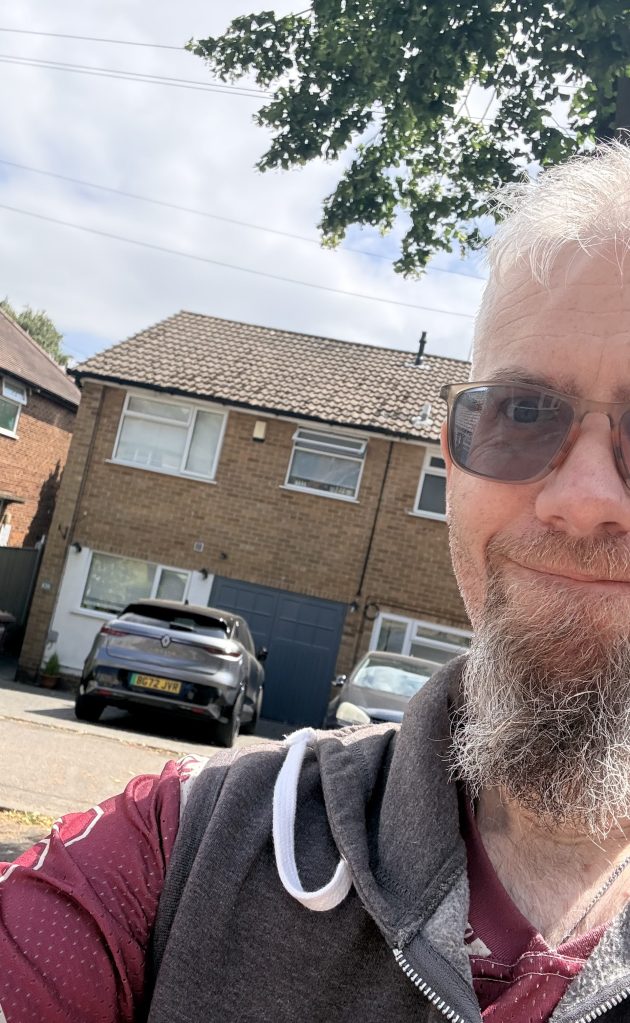
Kent Road was home before I had any concept that there was an alternative. I came back there from Highbury Hospital as a baby and lived there until I was around nine or ten. It was simply home, in that absolute childhood sense of the word. I hadn’t chosen it, paid for it, worried about its value or wondered whether the commute was sensible. It was where Mum and Dad lived and therefore where I lived.
It’s strange looking at a childhood home as an adult because the building remains resolutely physical while so much of what made it important doesn’t. Somebody else can occupy the rooms, decorate them differently, change the garden, replace the windows. The house carries on perfectly happily without you. Meanwhile, somewhere in your head, an entirely different version remains preserved.
Perhaps that’s the first lesson in the difference between houses and homes: you can leave one while somehow retaining the other.
Mapperley (pt 2)
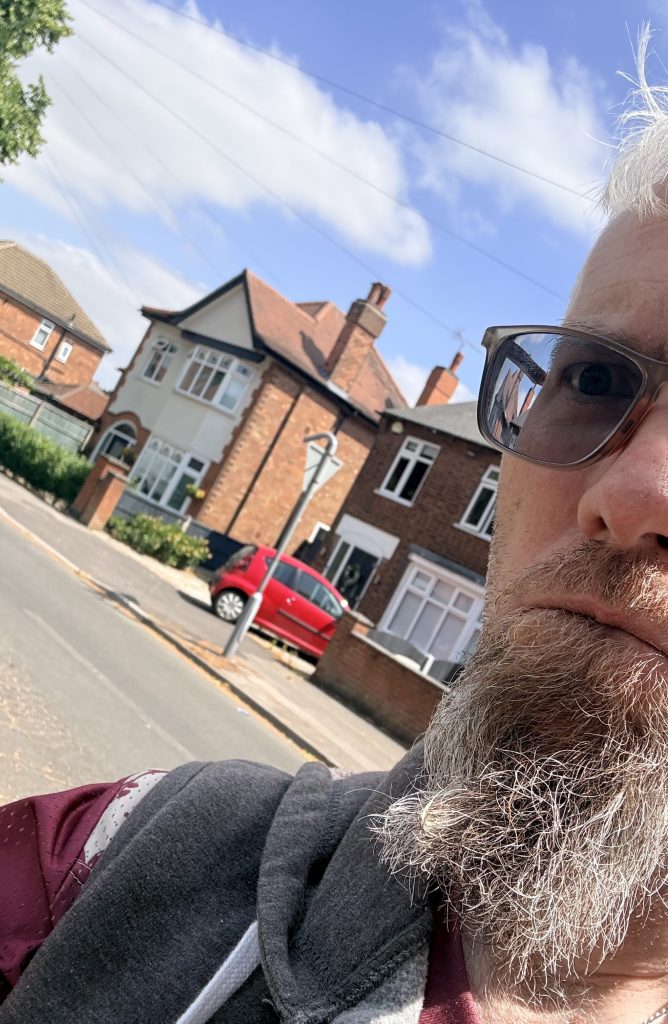
Our family moved to Fernleigh Avenue when I was around nine or ten, which means this was the house that saw considerably more versions of me.
Childhood became adolescence there, adolescence became early adulthood, and at some difficult-to-identify point I went from being a child who lived with his parents to an adult who… still lived with his parents.
It was the base for school, teenage years, university and eventually the beginning of working life. And although Kent Road was my first home, Fernleigh probably did more of the heavy lifting in turning me into whatever it is I eventually became.
The first two dots on my map are actually comically close together. Geographically, I had barely moved. Personally, almost everything had.
Then, at around 21 or 22, having graduated from university and acquired my first “proper job”, it was finally time to leave.

Wollaton
Woodhall Road was different from everything that came before it because this one was my decision.
I rented it with a work colleague. It was the first time I’d had the freedom — and responsibility — of living somewhere that wasn’t ultimately Mum and Dad’s problem. It was also, it would be fair to say, a bit of a party house.
Freedom and responsibility don’t necessarily arrive in equal proportions when you’re in your early twenties.
There were bills to pay, food to buy, rooms to clean and all the other tedious infrastructure of adult existence that had previously happened suspiciously automatically. There were also friends, parties and the novelty of having a front door that belonged to us.
It didn’t go amazingly well.
Perhaps that’s part of leaving home too. The first attempt doesn’t have to become somewhere you stay forever. Sometimes the significance of a place is simply that you went there and discovered you could survive outside the family home — albeit with varying degrees of competence.
Woodhall Road was home as an experiment.
Netherfield
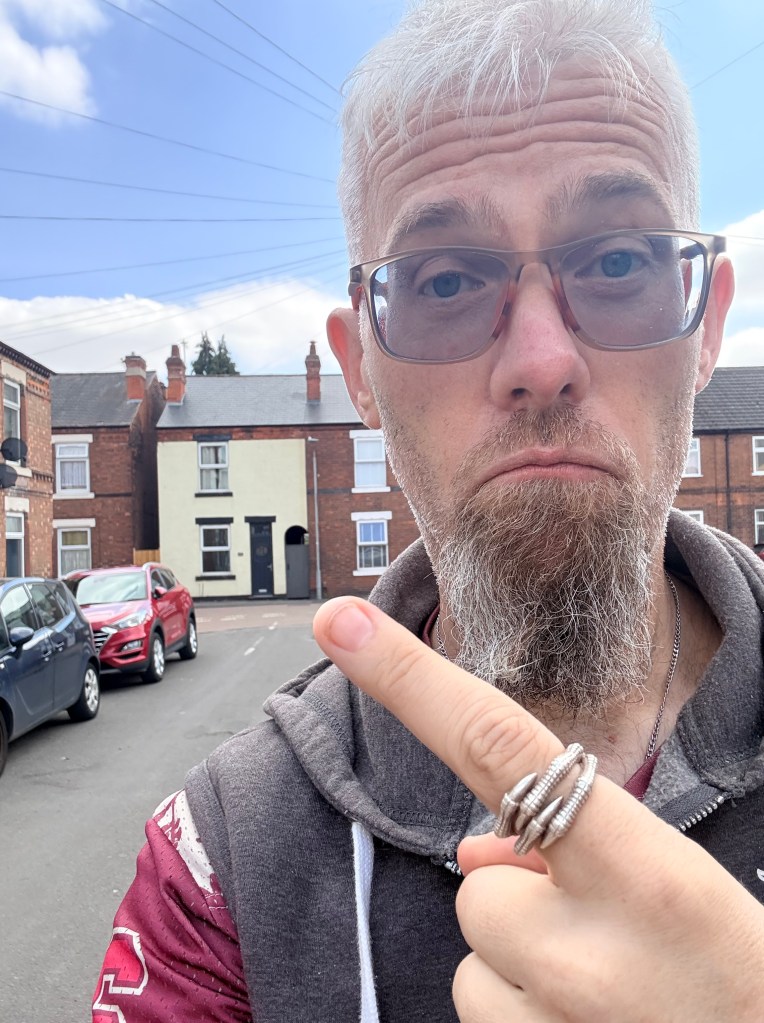
Godfrey Street was different again.
This was the first house I bought.
There’s something psychologically significant about that first mortgage payment. Renting somewhere means it’s your home, certainly, but buying somewhere introduces a rather more alarming sense of permanence. Nobody else is ultimately responsible for the building anymore. If something breaks, there isn’t a landlord to ring. The frighteningly large number on the mortgage statement belongs entirely to you.
For the first time I could point at a building and say, in the most literal possible sense, that’s mine.
It turns out, though, that ownership isn’t the same thing as permanence either.
Godfrey Street was an important stage rather than the destination. Another dot appeared on the map.
Gedling
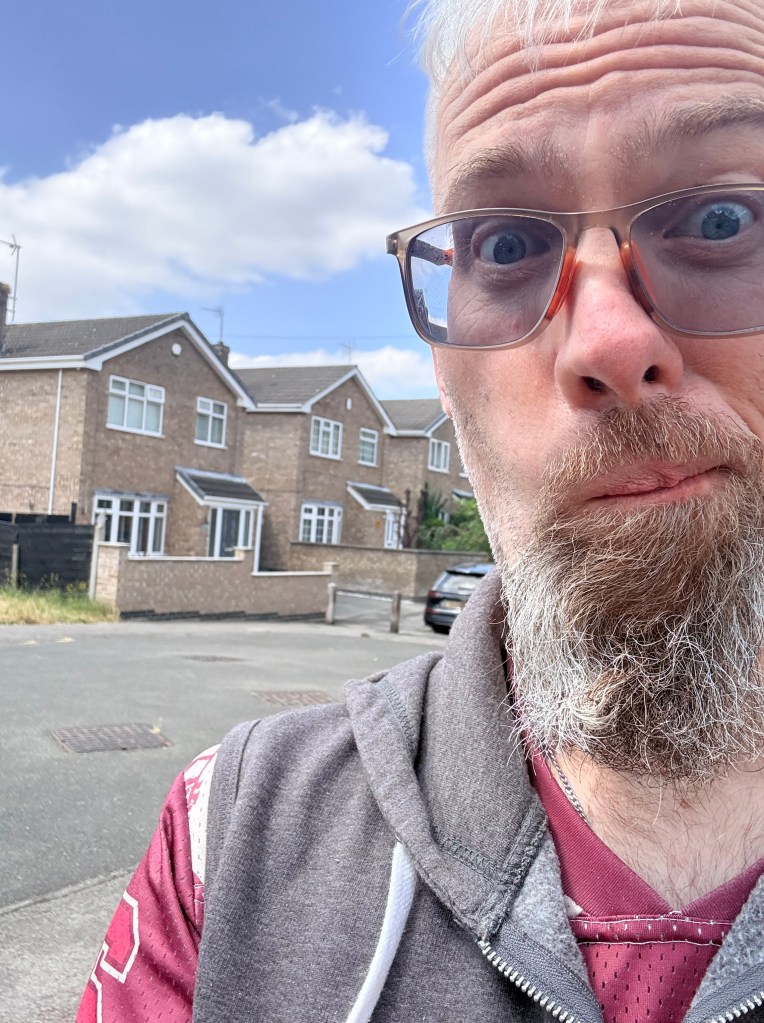
Ullswater Close was the first house I bought with somebody else — and that gave the word home another meaning again.
This wasn’t simply somewhere I’d chosen to live. It was somewhere built around an idea of a shared future.
Of course, not every imagined future happens.
We split up and the house was sold, and suddenly my neat progression through adulthood — parents’ house, rented house, first house, shared house — stopped looking quite so neat.
There’s something peculiar about leaving a home because a relationship has ended. The bricks haven’t failed. The roof hasn’t fallen in. The postcode remains exactly where it always was. But the thing that made that particular building your home has disappeared.
And so, for the first time since my early twenties, I went back to my parents.
Except I didn’t actually go back home.
Hathern
By this point Mum and Dad lived in Hathern, near Loughborough. So although I was retreating to parentville for a while, I wasn’t returning to either of my childhood homes. I was moving into a house that was home to my parents but had never previously been home to me.
It was a temporary landing place while I worked out what came next.
At roughly the same time another significant change happened. I’d moved jobs from Boots in Nottingham to a new role in Solihull, which created a practical geographical problem. Nottingham still exerted a fairly substantial gravitational pull on my life, but travelling from there to Solihull every day wasn’t especially attractive either.
So my next home began not with a grand emotional attachment to a particular town, but with something considerably more romantic:
I drew a triangle on a map.
I wanted somewhere that worked for commuting towards Solihull while still keeping me within sensible reach of Nottingham. Somewhere inside that rough area was where the next stage of life would happen.
And eventually that exercise led me to a place called Woodville.
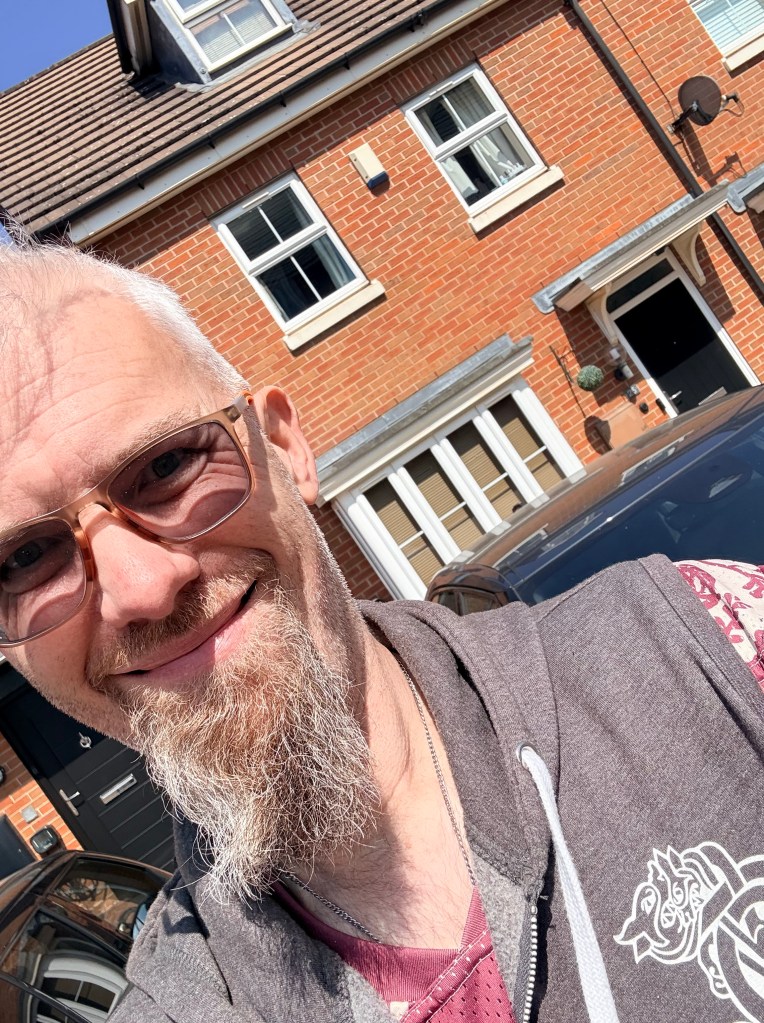
Woodville
There was no childhood connection to Woodville. No lifelong ambition to live here. No moment when I stood on a hill, gazed across South Derbyshire and thought, one day, all this will be mine.
It was, initially, a practical answer to a geographical problem.
And yet this is the dot that stuck.
Somewhere along the way, the house selected partly because it was in approximately the right place became home in a way that none of those practical calculations could have predicted.
Life accumulated around it.
Then Ella arrived, having undertaken a considerably more ambitious migration from Stevenage than my decades of increasingly elaborate manoeuvres around the East Midlands. Two completely different lines on the map eventually converged on the same little dot in Woodville.
And that changes a house too.
Looking at the map now, perhaps that’s the thing I find most interesting. Seven completely ordinary buildings have acquired enormous significance simply because, for a while, my life happened inside them. Other people lived in most of them before me. Other people live in most of them now. Remove the memories and they’re just addresses.
But I can’t remove the memories.
Kent Road remains childhood. Fernleigh Avenue contains school, teenage years and the long runway into adulthood. Woodhall Road is freedom, parties and the slightly chaotic first attempt at independence. Godfrey Street is the terrifying excitement of owning something. Ullswater is a shared future that didn’t happen. Hathern is retreat, regrouping and deciding what came next.
And Woodville is home.
Perhaps that’s why Home still gets to me — particularly when the version playing in my head is Paige’s.
A song is another thing that can become detached from where it originally came from. Gabrielle Aplin recorded it, but somewhere along the way Paige’s version became my version. She doesn’t perform it anymore, much to my perpetual sadness, but I can still hear it.
Places seem to work like that too.
I could drive back to Mapperley tomorrow and stand outside Kent Road or Fernleigh Avenue. The buildings would still be there. But I couldn’t really go back home to either of them, because the homes I remember don’t physically exist anymore. They’re populated by different versions of my family, my friends and myself. They’re places I’ve carried away with me.
And perhaps that’s ultimately what a home is.
Not a dot on a map, or a name on a mortgage statement, or even somewhere you necessarily stay.
It’s what happens there, who you share it with, and what remains with you after you’ve left.
Seven addresses. One fairly small corner of England. And, somehow, an entire life between them.
There’s only one way to sign this off, Paige playing Home.


Love this. And sad to hear Paige stopped playing.
I’ve not moved house for 40 years til this month!